

Loading
Just a moment while this page opens.
Just a moment while this page opens.
Just a moment while this page opens.
Wellington, Pōneke in te reo Māori: work, study, the visas that let you live there, and free help after you arrive.
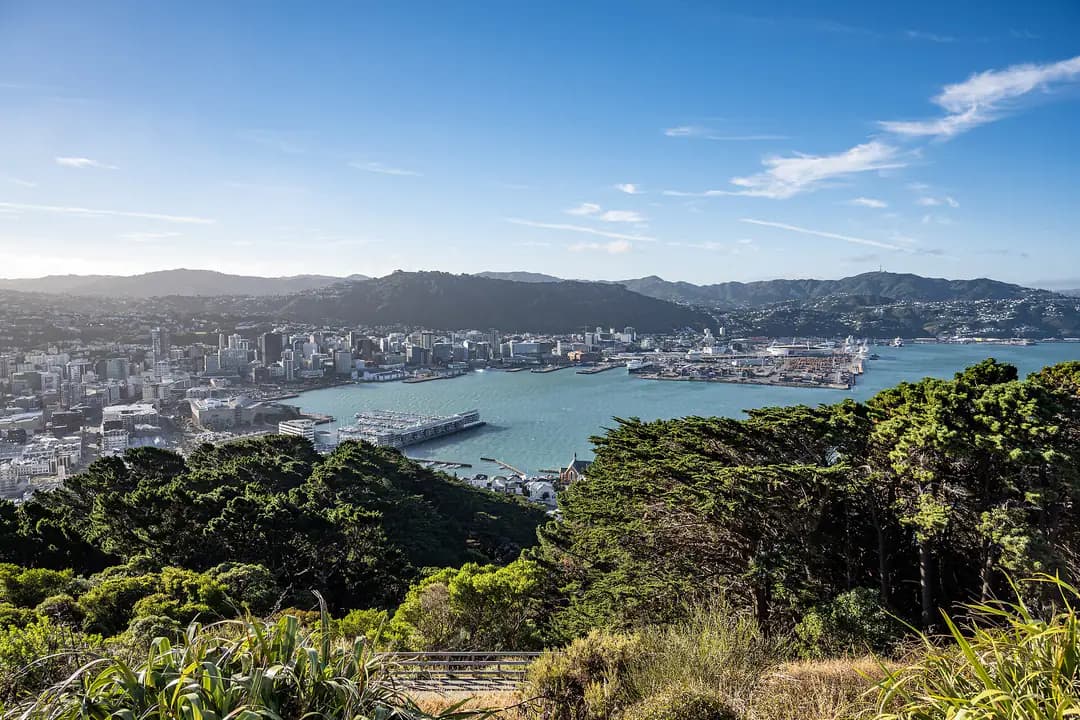
Photo: Takeshi Aida(opens in a new tab), CC BY-SA 2.0(opens in a new tab)
There is no visa just for Wellington. New Zealand's visas are national, so moving here means qualifying for a visa from Immigration New Zealand (INZ), the government agency that decides visas, and finding work or study in the city.
Wellington City Council describes Wellington as New Zealand's centre of government and the world's southernmost capital city. Parliament moved to Wellington in 1865.
In te reo Māori, the Māori language, the council calls the city Pōneke: its About Wellington City page is headed "Mō Pōneke". Its page on Māori history gives another name Māori gave the area, Te Whanganui-a-Tara, and explains that it means "the great harbour of Tara".
Wellington is in the Wellington region, and its council is Wellington City Council.
210,800 people, as Stats NZ estimates for 2025.
The public universities, polytechnics and wānanga (tertiary institutions that teach in a Māori cultural context) with a campus in Wellington:
WellingtonNZ's guide to doing business in Wellington describes the city as home to the Government and to the headquarters of most of New Zealand's central government agencies. The same page notes that Wellington is a UNESCO City of Film, known for its screen industry and post-production work (the editing and effects done after filming). The council's own profile calls Wellington a leading centre for creative industries, such as film and computer technology, and the home of the New Zealand Stock Exchange (NZX).
Some visas require you to work for an accredited employer: a business that INZ has approved to hire workers from overseas. INZ's accredited employer list lets you check an employer by searching its company or trading name, or its New Zealand Business Number (NZBN), a 13-digit number. The tool has one search box and no location filter, so it cannot show you which accredited employers are in Wellington. INZ notes that some accredited employers choose not to appear in the results, so if a Wellington employer you are talking to is missing, ask them.
These universities have campuses in the city:
If you plan to study here first and stay afterwards, our guide to going from study to residence explains how that works.
Tenancy Services' market rent tool shows the weekly rent for properties in an area, so you can compare Wellington suburbs before you agree to rent.
The council explains that a building confirmed as earthquake-prone is entered into a national register, which lists the type of notice issued and the time frame for strengthening work. You can search the register by address or suburb before you rent.
Public transport is provided by Greater Wellington, the regional council, under the name Metlink: a bus, train and ferry network for the wider region, including Wellington City, the Hutt Valley, Porirua, the Kāpiti Coast and the Wairarapa. Greater Wellington also looks after regional parks and flood protection.
Wellington City Council's page on diverse communities points to practical help. The city's libraries have material to help people learn English, plus books and newspapers in other languages. You can ask for an interpreter when you talk to the council, and the council supports festivals such as Diwali.
For first steps that apply anywhere in New Zealand, such as finding somewhere to live, getting a doctor and finding schools for your children, see INZ's page on setting up your life in New Zealand.
Answer our free questionnaire and get a free summary of your eligibility for every New Zealand pathway we assess, including those in Wellington. The full report is a later choice, never a condition.
Start the free questionnaire