

Loading
Just a moment while this page opens.
Just a moment while this page opens.
Just a moment while this page opens.
Can you move to New Zealand as an electrician? Registration, the Green List, work visas and residence for this job, and your first steps, from official pages.
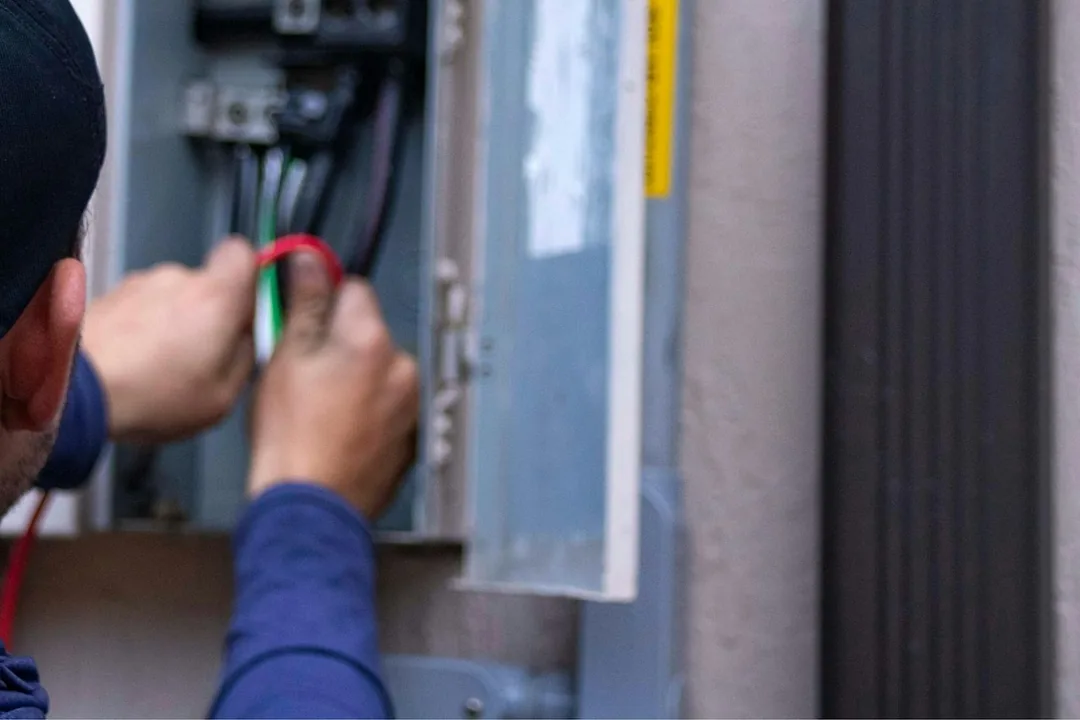
Moving to New Zealand as an electrician is possible, and it rests on two separate decisions. Immigration New Zealand (INZ), the government's immigration service, decides whether you get a visa. The Electrical Workers Registration Board (EWRB) decides whether you may do the work: INZ lists electrician among the jobs that need occupational registration, and advises starting that process as soon as possible. The rule comes from law. EWRB says people who are registered and hold a current practising licence from it are authorised to carry out or supervise prescribed electrical work, which it describes as specific types of electrical work regulated under the Electricity Act 1992 and the Electricity (Safety) Regulations 2010, such as installing, maintaining and testing electrical fittings. For electricians trained overseas, EWRB's route includes a period of supervised work in New Zealand before the practising licence.
Stats NZ sorts jobs with the National Occupation List (NOL). Each code has a skill level, which says how much training the job usually needs.
Skill level 3: jobs that usually need a level 4 certificate, or at least 3 years of relevant experience
The Green List names roles New Zealand needs workers for. If your role is listed and you have the qualifications, registration or experience it requires, you may be able to apply for a residence visa straight away (Tier 1) or after 2 years of working in New Zealand (Tier 2).
Registration body: Electrical Workers Registration Board. You must be registered with it to work in this job in New Zealand.
EWRB registers electrical workers in classes, and electrician is one of them. Its page for overseas-trained applicants sets out the steps in order:
For the electrician class, EWRB asks for 4 years (8,000 hours) of practical training and experience as an electrician overseas, including at least 1 year (2,000 hours) of wiring installation within buildings. The work it lists includes installing switchboards and protective devices, earthing, fault-finding, and testing and certification, and your work history references must be certified and show start and end dates.
Registration is not a one-off. EWRB says you must renew your practising licence every 2 years, and to apply for one you must have completed a Competence Programme, a course that refreshes your knowledge and assesses your competence, within the last 2 years.
The job offer comes first. The Accredited Employer Work Visa (AEWV) needs a full-time job offer from an employer INZ has accredited to hire migrants, and INZ must also have approved that employer to hire a migrant for your particular job, a step it calls the job check. Because the job needs registration, you must provide full or provisional New Zealand registration, or confirmation from EWRB that your job is eligible for it. If the job's skill level is 3 to 5, INZ also asks you to show you can speak and understand English. Our AEWV guide covers the steps.
The Green List is INZ's list of roles it needs workers for, and it shows whether a role can lead to residence straight away or after a period of work. For electricians, it is the second: after working in New Zealand in the role for 2 years, you can apply for residence if you are eligible. INZ's Work to Residence Visa page asks for at least 24 months in a qualifying Green List job within the 30 months before you apply, and a full-time job or job offer with an accredited employer that is permanent or fixed-term for at least 12 months. You must also be 55 or younger, speak and understand English, and meet a minimum pay rate. For this role, the Green List also asks for EWRB registration as an electrician, or a Limited Certificate as an electrician that is not a trainee one. Our Green List guide explains how the list works.
The Skilled Migrant Category (SMC), a residence visa, also needs a job or job offer from an accredited employer. Its Points-based pathway needs 6 points, and INZ counts EWRB registration with a practising licence as 3 points; the rest can come from skilled work in New Zealand (work related to your job and paid at least the rate INZ sets), up to 3 points. Electrician does not appear on INZ's list of occupations eligible for the Trades and Technician pathway. Another option, the Skilled Work Experience pathway, asks for at least 5 years of directly relevant work experience, including at least 2 years of skilled work in New Zealand, all in jobs INZ rates at skill level 1 to 3. Our SMC guide and SMC points calculator go further.
Not on an application alone. EWRB says you must hold a Limited Certificate to complete work experience while working towards registration, and overseas-trained workers are invited to apply for one once their registration application has been assessed, if it succeeds. The certificate comes with conditions: a registered and licensed electrical worker must supervise your work, you must complete safety training within 3 months of receiving it, and you must make every attempt to finish the registration requirements while it is valid. For overseas-trained workers, it lasts up to 24 months, and a second one may be issued for no more than half the length of the first.
EWRB has a separate route for this under the Trans-Tasman Mutual Recognition Act 1997. If you hold a current Australian practising licence that is deemed equivalent to a New Zealand registration class, EWRB can convert it into a registration and practising licence; this route recognises Australian licences, not Australian qualifications. You apply with certified proof of identity, a certified colour copy of both sides of your Australian licence, a certified statutory declaration and a passport-quality photo, and copies must be certified by a Justice of the Peace, a public notary, a solicitor or a New Zealand court registrar. A converted licence is not a visa: INZ still decides that, and when you apply to work in the job, it asks for proof that you are registered.
Counting all their New Zealand work toward SMC points. When your points come from occupational registration, INZ says you can only include skilled work experience you gained after getting that registration. EWRB describes the Limited Certificate as the way to complete work experience while working towards registration, so months worked on one come before registration and do not add points on that basis. Plan for any extra points to come from work done after EWRB registers you.
Answer our free questionnaire, which asks about your work, and get a free summary of your eligibility for every New Zealand pathway we assess. The full report is a later choice, never a condition.
Start the free questionnaire