

Loading
Just a moment while this page opens.
Just a moment while this page opens.
Just a moment while this page opens.
Can you move to New Zealand as a paramedic? Registration, the Green List, work visas and residence for this job, and your first steps, from official pages.
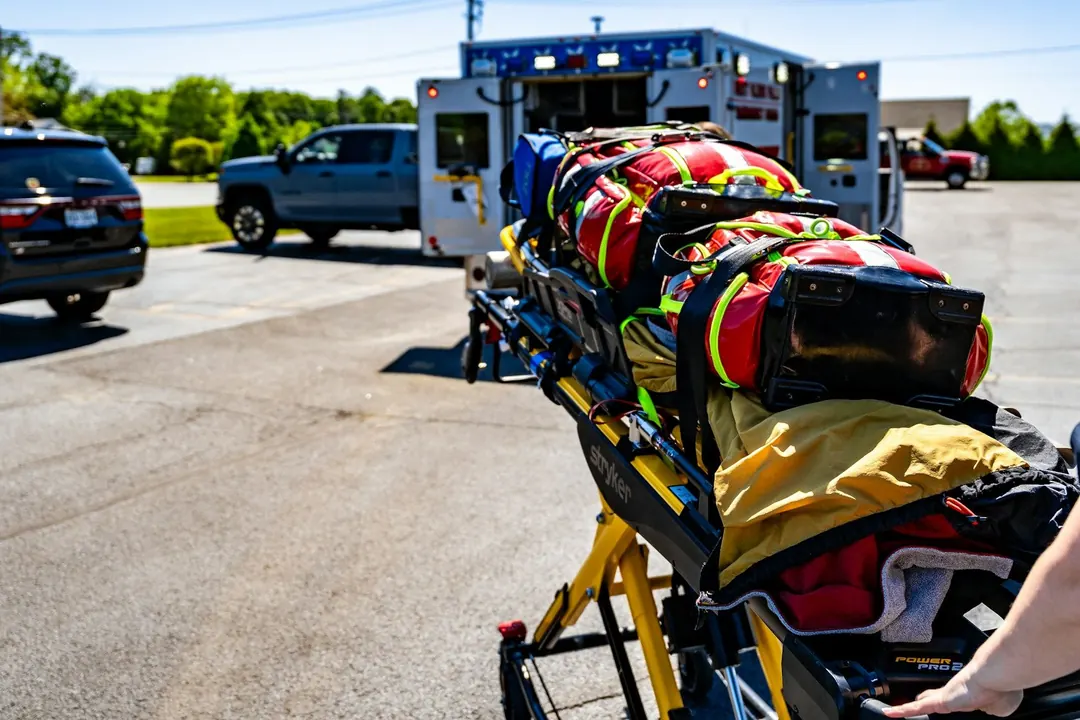
Yes, provided you hold two separate permissions: registration with Te Kaunihera Manapou Paramedic Council, the body responsible for registering paramedics, and a visa from Immigration New Zealand (INZ), the government's immigration agency. Registration is your licence to practise as a paramedic, while the visa is your permission to live and work in the country, and holding one does not give you the other. For paramedics trained overseas, the Council considers each qualification case by case, comparing it with the paramedicine degrees it has approved in New Zealand. It does not give preliminary assessments or any early sign of whether you will be registered, so you find out only after you apply.
Stats NZ sorts jobs with the National Occupation List (NOL). Each code has a skill level, which says how much training the job usually needs.
Skill level 1: jobs that usually need a bachelor's degree or higher, or at least 5 years of relevant experience
The Green List names roles New Zealand needs workers for. If your role is listed and you have the qualifications, registration or experience it requires, you may be able to apply for a residence visa straight away (Tier 1) or after 2 years of working in New Zealand (Tier 2).
Registration body: Te Kaunihera Manapou Paramedic Council. You must be registered with it to work in this job in New Zealand.
You can apply as an overseas-qualified paramedic only if you hold an appropriate paramedic qualification. The Council then decides whether it is equivalent to, or as satisfactory as, the qualifications it has approved, which are bachelor's degrees in paramedicine from Auckland University of Technology (AUT) and Whitireia New Zealand. You send evidence of your studies and of recent experience in paramedic work, education or research, and you match your qualification's learning objectives to the Council's competence standards. If its advisers find standards you have not shown, the Council may invite you to a competence assessment at your own expense, held only in New Zealand, at AUT or Whitireia. If a job is waiting on your registration, the Council asks you to tell it.
The Council's English policy accepts your English without a test if English is your first language and you completed your undergraduate paramedic training in New Zealand, Australia, the UK, Ireland, Canada or the United States. Otherwise you need IELTS Academic with at least 7 in each band, or OET with at least 350 in each part, and each set of scores must come from one sitting. Paramedics registered in Australia use a separate mutual recognition route. Once registered, every paramedic is assigned a scope of practice, the paramedic scope, which centres on urgent and emergency assessment, diagnosis and treatment, with advice, referral and transport where needed.
INZ's Green List names a paramedic role, Ambulance Paramedic, and says it needs registration with the Paramedic Council. INZ lists it as a role for which people who meet all the requirements can apply for the Straight to Residence Visa, a resident visa that asks for a full-time job or offer from an accredited employer (one INZ has approved to hire migrants), an age of 55 or younger, and its other requirements. The Green List labels roles with codes from ANZSCO, an older numbered list of job types that INZ says its new National Occupation List will replace, so search it by role name. Our Green List guide explains the list.
A job offer comes first for each of these visas. The Accredited Employer Work Visa (AEWV) needs a full-time offer from an accredited employer with an approved job check, plus any registration the job requires, and INZ adds that New Zealand employers or agents cannot charge you fees for a job. Our AEWV guide covers the rest.
The Skilled Migrant Category (SMC) is a residence visa that also needs a job or job offer from an accredited employer (INZ). On its points-based pathway, which asks for 6 points, Paramedic Council registration is worth 3. If you claim points for registration, the other 3 can come only from skilled work in New Zealand after you register: 1 point for a year, 2 for 18 months and 3 for 2 years. Our SMC guide and points calculator show how that adds up.
In emergency ambulance work, the employers are the providers that Health New Zealand's Ambulance Team contracts to deliver emergency ambulance services on behalf of Health New Zealand and the Accident Compensation Corporation (ACC). Road ambulance is run by Wellington Free Ambulance, which covers Wellington, the Hutt Valley and the Wairarapa, and by Hato Hone St John, which covers the rest of the country. Air ambulances and the communications centres that answer 111 calls make up the rest of the service. Before a job offer becomes the basis of a visa, check the employer on INZ's accredited employer list. INZ notes that some accredited employers choose not to appear in its search, so ask the employer directly if you cannot find it.
Only a paramedic who holds the matching endorsement may use either title. The Council recognises extra training through specialist paramedic practice endorsements added to the paramedic scope, and it grants them, at its complete discretion, to paramedics with additional qualifications or experience. A critical care paramedic specialises in critically ill or injured patients, including advanced airway management and care during transfers between facilities. An extended care paramedic specialises in primary and preventive care in the community, for patients whose conditions are less urgent but often complex. A third endorsement, intensive care paramedic, is being closed, and the Council says applications for it close on 2 December 2026.
Letting your English test result expire while you wait. The Council's policy says results must be less than two years old and still valid on the day it approves your registration, not just on the day you apply, and it warns that some registration processes take time. Scores must also come from a single sitting, so a 7 in writing from one IELTS test and a 7 in speaking from another will not combine. Time your test so it covers the whole assessment, including any competence assessment in New Zealand.
Answer our free questionnaire, which asks about your work, and get a free summary of your eligibility for every New Zealand pathway we assess. The full report is a later choice, never a condition.
Start the free questionnaire