

Loading
Just a moment while this page opens.
Just a moment while this page opens.
Just a moment while this page opens.
Can you move to Canada as a mechanic? Getting licensed, the immigration routes that fit this job, and your first steps, from official pages.
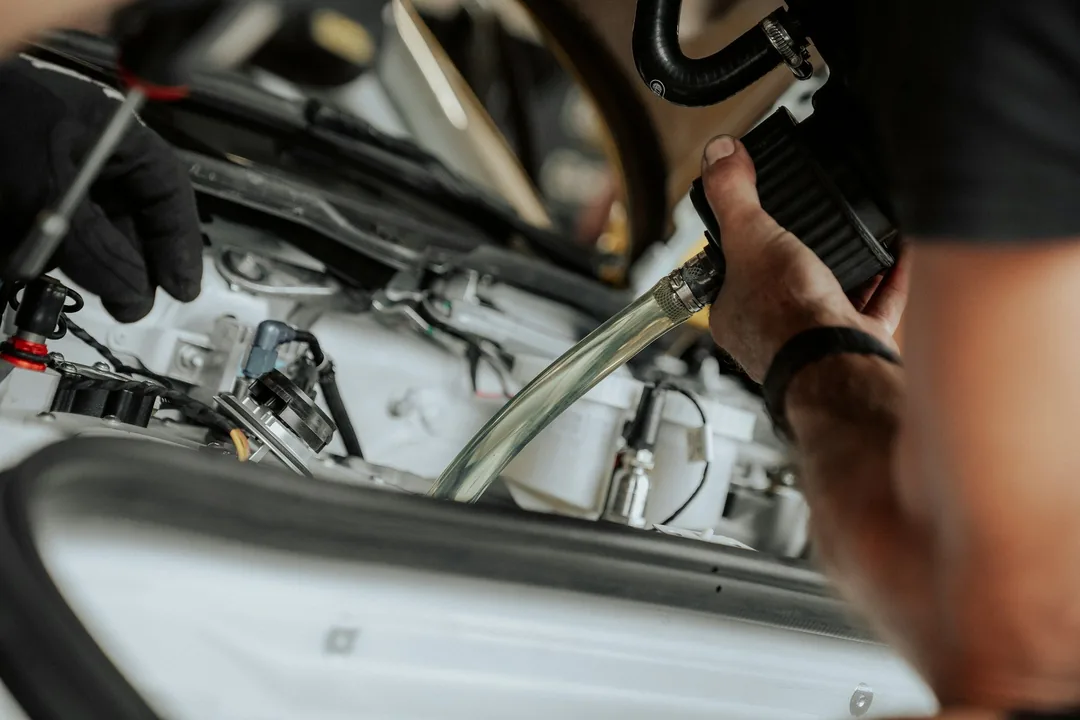
Mechanics can immigrate to Canada, whether you repair cars, trucks and buses or the heavy equipment used in construction, forestry and mining. Two separate authorities are involved. Permanent residence (PR, the right to live in Canada permanently) is a decision for Immigration, Refugees and Citizenship Canada (IRCC), the federal immigration department. The rules for working in the trade are set by the province or territory, and Job Bank, the Government of Canada's job site, lists automotive service technician certification as compulsory in Nova Scotia, Prince Edward Island, New Brunswick, Ontario and Alberta. One thing is specific to mechanics: Canada's job classification puts car and truck work and heavy equipment work under separate job codes, and IRCC treats them differently in its category rounds, grouping heavy-duty equipment mechanics with trade jobs and car, truck and bus mechanics with transport jobs.
Canada sorts jobs with the National Occupational Classification (NOC). Immigration programs use it to identify your job and its TEER level, which says how much training the job usually needs.
TEER 2: jobs that usually need a college diploma or apprenticeship training of 2 years or more, and supervisory jobs
Express Entry is the online system Canada uses to invite skilled workers to apply for permanent residence. Some of its rounds invite only people with recent work experience in a set group of jobs, called a category. This job is in:
Whether you need a licence for this job depends on the province or territory: some require one, others do not.
A national body for qualifications earned outside Canada: it assesses them or sets the entry exam for this job. The regulator in your province decides whether you go through it.
The steps to certification differ by province and territory, and mechanics fall into several trades. The Red Seal, Canada's interprovincial trade standard, has separate trades for automotive service technicians, who work on cars, light trucks, hybrids and electric vehicles; truck and transport mechanics, who work on commercial trucks, buses and emergency vehicles; and heavy duty equipment technicians, who work on mobile and stationary heavy equipment.
Whether a certificate is compulsory depends on the trade and the province. Job Bank lists truck and transport mechanic certification as compulsory in Nova Scotia, Ontario and Alberta. For heavy-duty equipment technicians, it lists certification as compulsory in Alberta, and in Quebec only in the construction industry, and voluntary in all other provinces and the territories. Quebec's own job profiles go further: they list a certificate as also required for car and truck mechanics and for heavy equipment mechanics, so check Quebec's rules directly if you plan to work there.
Ontario and Alberta show how differently provinces draw the lines. In Ontario, automotive service technician is a compulsory trade, and Skilled Trades Ontario puts the time to become competent in it at about 7,220 hours, roughly four years. Heavy duty equipment technician is not compulsory there. Alberta groups heavy-duty and truck work under one compulsory trade, Heavy Equipment Technician, which takes part in the Red Seal programs for both Heavy Duty Equipment Mechanic (Off Road) and Truck and Transport Mechanic.
The Red Seal exam for automotive service technicians has 125 questions, and 9 of them cover hybrid and electric vehicle systems.
Express Entry manages applications from skilled workers who want PR. You submit a profile to its pool, the Comprehensive Ranking System (CRS) scores it, and IRCC invites the top scores in rounds. Our Express Entry guide explains the system, and the CRS calculator gives an estimate of your score.
The Federal Skilled Trades Program, part of Express Entry, is for people qualified in a skilled trade, and both mechanic codes are in the group of jobs it accepts. Your experience must all be in the same job code: at least 2 years full-time, or 3,120 hours, within the 5 years before you apply. You also need a full-time job offer of at least 1 year or a Canadian certificate of qualification, which a province or territory issues once you pass its certification exam. Your English or French test results must also meet its minimum in each of the four language abilities, and you must intend to live outside Quebec.
In category rounds, each code counts only toward its own group of rounds, trade or transport. Either way, IRCC wants 12 months of full-time work, or part-time work adding up to it, in that one listed occupation within the past 3 years, in Canada or abroad, on top of the usual eligibility for an Express Entry program. Our guides to category rounds and to job codes cover the details.
Provinces also nominate people for PR (how provincial nominee programs work). British Columbia's program lists heavy-duty equipment mechanics among the construction trades its invitations may target, but not automotive service technicians, and it asks for a SkilledTradesBC certificate or registered apprenticeship matching the job offer (British Columbia). Ontario's Workforce Priority stream, introduced in June 2026, treats both mechanic codes as skilled trades. With a job offer in one, its language rule is at least CLB 5 in all four abilities on the Canadian Language Benchmarks, Canada's scale for language test results, though a listed credential from an eligible Ontario institution, earned in the past 3 years, can replace the test. Its education rule is a high school diploma or its equivalent from another country, or proof of a licence the job legally requires (Ontario).
Go by the work you did, not by your job title. The Red Seal descriptions help: automotive service technicians work on systems such as engines, steering, brakes, electrical systems and driver assistance systems, while heavy duty equipment technicians work for employers such as equipment dealers, construction contractors, forestry and mining companies and railroads. Truck and transport mechanics share a job code with automotive service technicians, as the Red Seal page for that trade shows. IRCC tells you to choose the code that most closely aligns with your work experience and to show that you performed the actions in its lead statement and most of its main duties.
That depends on the trade. Automotive service technician is compulsory in Ontario, so working legally takes a registered training agreement (the apprenticeship agreement you sign with a sponsor and register), a provisional certificate of qualification (the one-year certificate given to people who finish an Ontario apprenticeship) or a certificate of qualification, plus your name on Skilled Trades Ontario's public register. Heavy duty equipment technician is non-compulsory, and in a non-compulsory trade Skilled Trades Ontario says you do not have to be certified to work. Its certificate for that trade is still available, does not need renewing and does not put your name on the register. Truck and coach technician, Ontario's title for the Red Seal truck and transport mechanic trade, is compulsory too, and Job Bank lists Ontario among the provinces where truck and transport mechanics need certification.
Adding up years across both codes. Someone with 18 months repairing cars and 18 months on heavy equipment has 3 years as a mechanic, but not the 2 years in a single code that the Federal Skilled Trades Program asks for, because the experience must all be in the same code. Category rounds also count months in a single listed occupation, so split your work history by code before you create a profile and check each part on its own.
Answer our free questionnaire, which asks about your work, and get a free summary of your eligibility for every Canada pathway we assess. The full report is a later choice, never a condition.
Start the free questionnaire