

Loading
Just a moment while this page opens.
Just a moment while this page opens.
Just a moment while this page opens.
Can you move to Canada as a radiographer? Getting licensed, the immigration routes that fit this job, and your first steps, from official pages.
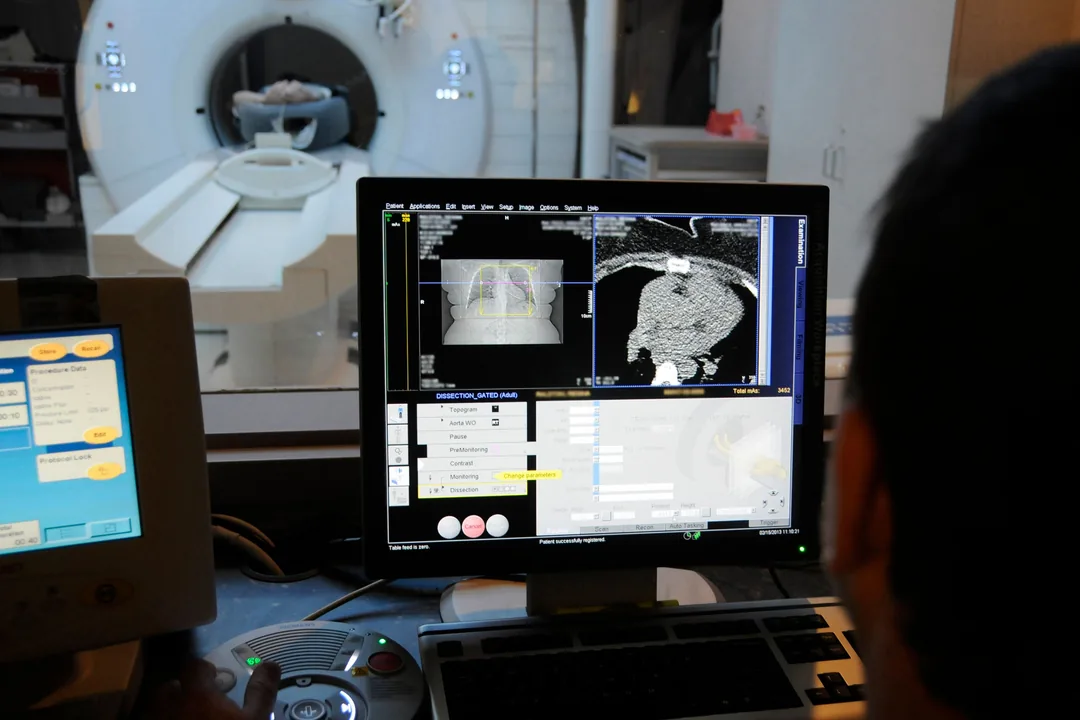
Yes. Job Bank, the federal jobs site, lists the job as medical radiation technologist (MRT), though its table shows some provinces using other titles, such as radiological technologist in Alberta. Two separate authorities decide your move. Whether you may immigrate, for example as a permanent resident (PR) who can live in Canada permanently, is decided by Immigration, Refugees and Citizenship Canada (IRCC), the federal immigration department. Each province sets its own rules for working in the job: Job Bank says a licence from a regulatory body is required in Nova Scotia, New Brunswick, Quebec, Ontario, Saskatchewan and Alberta, and certification by the Canadian Association of Medical Radiation Technologists (CAMRT) in every province except Quebec and British Columbia. A licence is not a visa, and a visa is not a licence. CAMRT also tells people trained abroad to choose their province first, because that choice decides who assesses their training.
Canada sorts jobs with the National Occupational Classification (NOC). Immigration programs use it to identify your job and its TEER level, which says how much training the job usually needs.
TEER 2: jobs that usually need a college diploma or apprenticeship training of 2 years or more, and supervisory jobs
Express Entry is the online system Canada uses to invite skilled workers to apply for permanent residence. Some of its rounds invite only people with recent work experience in a set group of jobs, called a category. This job is in:
Whether you need a licence for this job depends on the province or territory: some require one, others do not.
A national body for qualifications earned outside Canada: it assesses them or sets the entry exam for this job. The regulator in your province decides whether you go through it.
Before an MRT educated abroad can write CAMRT's national certification exam, an assessment checks their language, training and work experience against the standard of a Canadian accredited program. For its own assessments, CAMRT asks you to apply in one discipline, such as radiological technology (radiography), nuclear medicine technology or magnetic resonance, and wants the work experience you list to fall within the past five years in that discipline. Who carries out the assessment depends on the province:
Ontario is one province that requires registration: you must be registered with the College of Medical Radiation and Imaging Technologists of Ontario (CMRITO) to work there. Its requirements include a jurisprudence course on Ontario's rules, practice in your specialty (or completion of your program) within the five years before you apply, and a pass in the CAMRT exam (or the exam of Quebec's regulator), which it cannot waive. CMRITO has to approve you before you may register for the CAMRT exam.
For language, CAMRT accepts evidence that your program was taught and assessed in English or French, or a test result that reaches its minimums. Its list includes IELTS General Training and CELPIP General, which are also among the tests IRCC accepts for Express Entry, so one result may serve both if it meets each body's scores.
Express Entry is how IRCC manages PR applications online for the federal programs aimed at skilled workers. Eligible candidates are placed in its pool and receive a Comprehensive Ranking System (CRS) score, and at each round IRCC invites the highest-ranking eligible people to apply. Our Express Entry guide goes through the process, and our CRS calculator lets you work out an estimate of your own score.
Some rounds are held for occupations IRCC has chosen, and medical radiation technologists are on its list for health and social services rounds. In such a round IRCC ranks only the candidates who meet the list's conditions, so you are measured against them rather than against the whole pool. You meet them with at least 12 months of full-time work, or the same amount part-time, in one listed occupation within the past three years, in Canada or abroad, and the months need not be in a row. Candidates also have to meet Express Entry's own minimum criteria, including eligibility for a program it manages. Our guide to category rounds explains how IRCC uses these lists.
Provinces and territories can also nominate people who want to become permanent residents, which means selecting them before they apply to IRCC, and a nomination tied to an Express Entry profile adds 600 points to the score. Our provincial nominee guide explains how nominations work. Provincial routes that list MRTs include:
In Alberta, possibly. The Alberta College of Medical Diagnostic and Therapeutic Technologists (ACMDTT) has a Provisional Practice Permit that lets applicants educated abroad work under supervision for up to a year while they prepare for the certification exam, provided they have a job offer and the College's approval. To get it, you must prove that you can legally work in Canada and meet any extra requirements in the College's decision letter. The College also points out that an assessment outcome is not a registration decision and does not authorize you to practise.
Ontario's college states that you must be registered with it to work, and the exam pass is one of its registration requirements. It also requires applicants to be citizens or permanent residents of Canada, or authorized under Canada's immigration law to practise, so your immigration status and your registration have to line up.
Not on its own. CMRITO calls bridging programs voluntary and says that completing one does not meet the education requirement for registration and is not equivalent to completing an approved program. It adds that parts of them may still help you learn how practice works in Canada. CAMRT lists bridging options in British Columbia, Ontario and Alberta, including a radiography program at the British Columbia Institute of Technology that it describes as preparation for CAMRT certification, and a course at the Michener Institute in Toronto designed to prepare internationally educated X-ray technologists for the national exam. It also runs its own National Experiential Bridging Program, built on peer mentorship, an online microcertificate and on-site job shadowing.
Expecting one education report to cover both immigration and your licence. IRCC's educational credential assessment (ECA) tells you what your education is equal to in Canada for Express Entry, and IRCC warns that the report does not promise you a licence in a regulated job. When Alberta's ACMDTT assesses an application itself, it asks instead for an academic course-by-course assessment from an approved assessor such as CES, ICAS, ICES, IQAS or WES, and it will not accept assessments done for Canadian immigration. Check which report each body wants before you order one; our ECA guide explains the immigration version.
Answer our free questionnaire, which asks about your work, and get a free summary of your eligibility for every Canada pathway we assess. The full report is a later choice, never a condition.
Start the free questionnaire