

Loading
Just a moment while this page opens.
Just a moment while this page opens.
Just a moment while this page opens.
How Saskatchewan chooses immigrants, the Saskatchewan streams our report checks, what changes if you already live, study or work in Canada, and what life is like in its main cities.
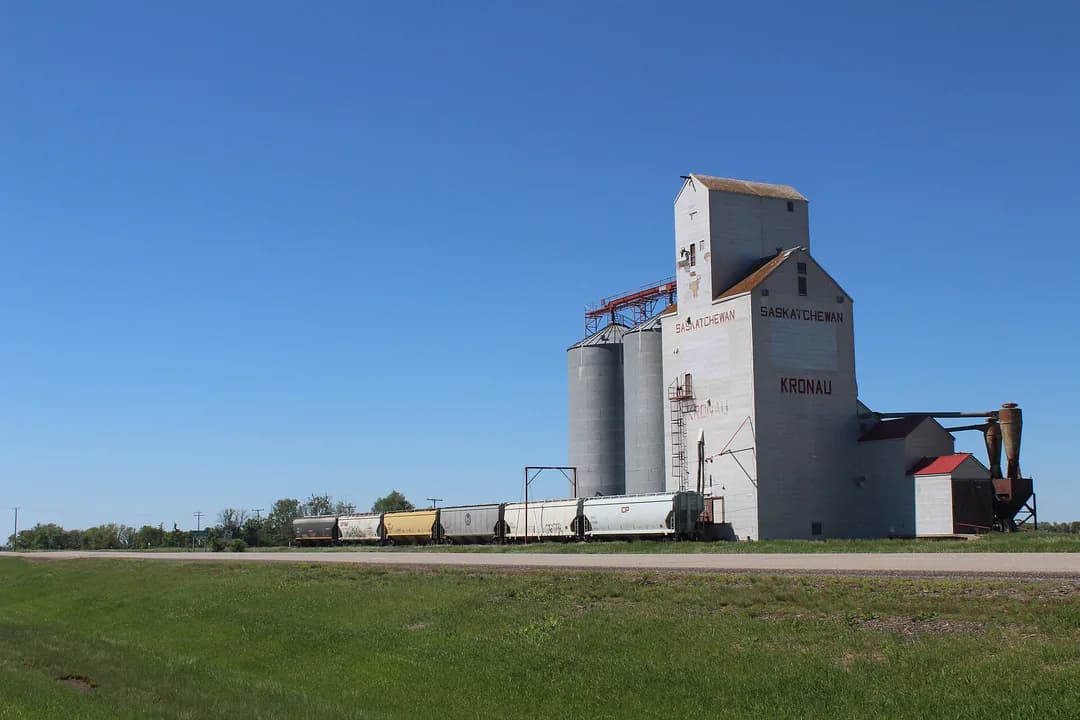
Photo: Yakky97(opens in a new tab), CC BY-SA 4.0(opens in a new tab)
To move to Saskatchewan for good, you can apply to the province's own immigration program, the Saskatchewan Immigrant Nominee Program (SINP).
Saskatchewan does not give out permanent residence (PR, the right to live in Canada permanently). It chooses people and nominates them, which means it recommends them to the federal government. You then apply for PR to Immigration, Refugees and Citizenship Canada (IRCC), the federal immigration department, and IRCC has the final say on that application.
For 2026, the province reserves at least half of its nominations for priority sectors such as healthcare, agriculture and skilled trades. It also has a scoring tool of its own: several of its streams score applicants on a Saskatchewan points grid, separate from the federal points system.
Yes. Saskatchewan runs the Saskatchewan Immigrant Nominee Program (SINP), a provincial nominee program: the province chooses (nominates) people it wants, and the federal government then decides on their permanent residence, the status that lets you live and work in Canada with no time limit.
Saskatchewan Immigrant Nominee Program (SINP)A stream is one route within a program, with its own rules. Our report checks 6 Saskatchewan streams against your answers.
SINP International Skilled Worker - Employment Offer
For people offered a permanent, full-time skilled job by a Saskatchewan employer, where the province has approved the position, and who score enough on the province's points system.
SINP International Skilled Worker - Health Talent Pathway
For health care workers with a job offer from a Saskatchewan employer in an eligible health occupation, plus education after high school and a language test result.
SINP International Skilled Worker - Occupations In-Demand
For skilled workers whose occupation Saskatchewan counts as in demand, with no job offer needed, who score enough on the province's points system and are invited to apply.
SINP International Skilled Worker - Saskatchewan Express Entry
For people who have a profile in Express Entry, Canada's online system for skilled workers, whose occupation Saskatchewan counts as in demand and who score enough on its points system.
SINP Saskatchewan Experience - Existing Work Permit
For people already working full time in Saskatchewan on a work permit, who have worked long enough for their employer and have a permanent, full-time job offer from them.
SINP Saskatchewan Experience - Students
For graduates of a Saskatchewan college or university who have paid work experience in the province in their field and a permanent, full-time job offer related to their studies.
Where a stream needs a job offer, the province checks the job before you can apply. Your employer registers on OASIS, the SINP's online portal, and submits the job there to be assessed. That submission is called an Employer Position Assessment (EPA). On its Employment Offer page, the province says it tells you when the EPA is conditionally approved. You must then log in within 10 days, or sooner if the EPA expires first, to confirm the details.
Some jobs have a fixed route. The same page says truck drivers must apply under the Existing Work Permit stream. It also says health care jobs in the health group of Canada's occupation codes (the National Occupational Classification, or NOC) must apply under the Health Talent Pathway or the Students stream.
Your work permit can narrow your choice too. The Existing Work Permit page says truck drivers need certain types of work permit to use that stream, and that people holding an open spousal work permit, the kind issued to a spouse or partner, cannot apply under it. Graduates on a post-graduation work permit (a permit for people who have finished a study program in Canada) must apply under Students, Employment Offer, the Health Talent Pathway, the Agriculture Talent Pathway or the Innovation and Tech Talent Pathway. Our report does not check the Agriculture Talent Pathway or the Innovation and Tech Talent Pathway: the SINP streams listed on this page are the ones it checks.
Occupations In-Demand and Saskatchewan Express Entry work differently. They start with an expression of interest, explained below.
When the SINP approves an application, its How to Apply page says it sends your nomination to IRCC. Nominees with a Saskatchewan job offer also get a letter supporting a temporary work permit. You must then apply to IRCC for PR within six months of your nomination. A nomination is not PR: IRCC still reviews your health, security and criminal record, and it can refuse the application. Our guide to provincial nominee programs explains the difference.
Saskatchewan Express Entry is only for people accepted into the Express Entry pool, the federal online system that ranks skilled workers by points, and IRCC says a provincial nomination through Express Entry gives 600 extra points; our Express Entry guide explains that system from the start.
The Employment Offer, Occupations In-Demand and Saskatchewan Express Entry streams score you on the province's points grid. The grid has 110 points in total, and the province states the pass mark plainly: you need at least 60 points to apply.
The grid has two parts. The first, which the province calls labour market success, gives up to 80 points for education and training, skilled work experience, language ability and age. Language points depend on your level on the Canadian Language Benchmarks (CLB), the scale the grid uses for English and French test results. The language score converter shows which level a test result matches.
The second part, called connection to the Saskatchewan labour market and adaptability, gives up to 30 points, and what counts depends on the stream. Under Employment Offer, it is a high-skilled job offer from a Saskatchewan employer. Under Occupations In-Demand and Saskatchewan Express Entry, it comes from a close relative in the province, past work in Saskatchewan and past study there.
Every point needs proof. The province says the documents must be attached to your SINP application when you submit it, or the application will be closed and returned to you.
Under Occupations In-Demand and Saskatchewan Express Entry, a close relative living in Saskatchewan is worth 20 points on the grid, and the province's definition is exact. The relative can be yours or your accompanying spouse's. They must be a Canadian citizen or permanent resident living in Saskatchewan, and must not be supporting any other family member's application when you apply. The eligible relatives are a parent, sibling, grandparent, aunt, uncle, niece, nephew or first cousin, and step-family members or in-laws of the same relationships.
One household can support only one application at a time. A relative who is already supporting someone cannot support you until that nominee has lived and worked in Saskatchewan for six months, according to the province's page on connecting family members.
The province checks all of this. The Occupations In-Demand page lists the documents: proof of the relationship, such as a birth or marriage certificate; a copy of the relative's permanent resident card, citizenship card or Canadian passport; proof that they have lived in Saskatchewan for the past twelve months and are financially independent, such as utility bills, a Saskatchewan health card or proof that they rent or own a home in Saskatchewan; and proof of their income for the past three months.
Occupations In-Demand and Saskatchewan Express Entry do not accept applications straight away. You first submit an expression of interest (EOI) in the province's EOI system. The province stresses that an EOI is not an application: it is an online form where you state your interest and show your qualifications.
An EOI stays active for one year from the date you create it, and you can have only one active EOI at a time. When it expires, you must create a new one to stay in the system.
Your EOI is scored on the points grid above. The province then holds selections, often called draws: rounds in which it invites the highest-ranked candidates to apply. When candidates have equal scores, people with a connection to Saskatchewan (a close relative, past work or past study there) are chosen first, then those with the most work experience and highest language scores.
Selection dates are not posted before the selections take place. The province says their size and frequency depend on labour market need, provincial priorities and the number of applications processed since the last selection. It may also limit a selection to certain occupations so that applications do not exceed job demand in Saskatchewan.
If you are invited, the EOI system page says you then have 60 days to submit a complete online application with your documents. The Occupations In-Demand page adds that not everyone who submits an EOI is invited, that you must then prove the points you claimed, and that your work experience must not be in an occupation on the province's Excluded Occupation List, a list of occupations it does not accept. The Saskatchewan Express Entry page has the same rule.
For 2026, Saskatchewan's immigration FAQs give an initial allocation, meaning the number of nominations the province may make, of 4,761.
For 2026, at least half of those nominations are reserved for priority sectors: healthcare, agriculture, skilled trades, mining, manufacturing, energy and technology. The province says that in 2026, applicants working in these sectors can apply at any time, including from overseas.
For 2026, some sectors have a cap, a limit on their share of nominations: accommodation and food services (15%), trucking (5%) and retail trade (5%). In 2026, applicants in those sectors may apply only during set intake windows (fixed periods when applications are accepted), and only in the last six months of their work permit.
The FAQ gives these figures for 2026, so check it again if you apply in a later year.
Apply to eHealth Saskatchewan for a Saskatchewan health services card; its page explains who is generally eligible for Saskatchewan health coverage and says you must show documents, including proof that you can legally be in Canada. SGI, which runs driver licensing in the province, explains on its Moving to Saskatchewan page whether you can exchange your licence or must start its graduated licensing program as a new driver. The province's First Things to Do in Saskatchewan page lists other early tasks, from getting a Social Insurance Number to contacting your Regional Newcomer Gateway for English classes and job help. IRCC's Find free newcomer services near you tool lists settlement services in your area for eligible newcomers.
Our report works out your score on the SINP points grid from your answers. If you say you would settle in Saskatchewan, or that you have no preference, the questionnaire asks whether you or a partner coming with you have a close relative living in the province. For Occupations In-Demand and Saskatchewan Express Entry, which invite people from the EOI pool, the report carries a checklist step for receiving the province's invitation.
Saskatchewan's Existing Work Permit stream is built on work you already do in the province. Its page asks for at least six months (780 hours) of consecutive, paid, full-time work in the job your employer's Employer Position Assessment covers. The section on how the SINP picks people says which work permits it rules out.
On the points grid, past work in Saskatchewan earns connection points for Occupations In-Demand and Saskatchewan Express Entry only if it adds up to at least 12 months in the past five years on a work permit. If your job is in a capped sector, the 2026 timing rules in the section on the sectors Saskatchewan prioritises apply to you. Once nominated, a worker living and working in Saskatchewan who has applied for PR and for a work permit extension can ask the SINP to support continued Saskatchewan health coverage.
A post-graduation work permit (PGWP) earned through studies in Saskatchewan is one of the permits the province's Students stream accepts, and a study permit is accepted too if your job offer is in a priority sector. The stream is for graduates of a recognized Saskatchewan post-secondary school, and asks for at least six months (780 hours) of paid work in Saskatchewan related to your studies (on-campus, off-campus and co-op work all count) and a permanent full-time job offer in your field. The SINP's FAQ adds that you must have lived in Saskatchewan while you studied.
If you studied in another province, the FAQ says the Students stream is not for you, even once you work in Saskatchewan; the other streams a PGWP holder may use are listed in the section on how the SINP picks people. For 2026, the province reserves 750 of its priority-sector nominations for Saskatchewan post-secondary graduates working in a priority sector, the FAQ says.
The Existing Work Permit stream counts only work done in Saskatchewan: its page says work done remotely does not count, and that every nominee on a temporary work permit must live in the province. If you studied elsewhere in Canada, the row on studying in Saskatchewan says what that rules out.
eHealth Saskatchewan says that after a move from another province, coverage may begin on the first day of the third month after you move. Check with your old plan about those months. It lists who may qualify:
SGI says a new resident must apply for a Saskatchewan driver's licence within 90 days of becoming a resident, or before the out-of-province licence expires if that comes first. A valid regular licence (Class 5) from another province or territory is exchanged at any motor licence issuer, and a driver with more than two years of experience, not counting time as a learner, gets the Saskatchewan licence without any testing. The first-steps section links the health card and licence pages.
These federal programs run only in some provinces or communities, and Saskatchewan is one of them.
For workers with a job offer from an employer approved by a participating rural or remote community, and a recommendation from that community, where they plan to settle.
Communities taking part in Saskatchewan

Photo: Quintin Soloviev(opens in a new tab), CC BY 4.0(opens in a new tab), cropped
Population: 266,141 (Statistics Canada, 2021 Census)
Saskatoon takes its name from the Cree word misaskwatomina, a sweet purple berry that still grows in the area, according to the City of Saskatoon. The city sits in the centre of Saskatchewan, where the land dips into the South Saskatchewan River valley, and describes itself as a commercial and educational centre.
The University of Saskatchewan has its main campus in Saskatoon. The facilities it names include the Canadian Light Source synchrotron, the Vaccine and Infectious Disease Organization (VIDO) and its global institutes for food security and for water security. Saskatchewan Polytechnic has several sites in Saskatoon, among them a Mining Engineering Technology Building.
For newcomers, the City names its main immigrant-serving organizations on its welcoming immigrants page: Global Gathering Place, International Women of Saskatoon, the Saskatchewan Intercultural Association and the Saskatoon Open Door Society. The same page says the Saskatoon Public Library offers newcomers library tours, materials for learning English and one-on-one computer tutorials. For buses and trip planning, see the City's Saskatoon Transit page.

Photo: Haydn Blackey(opens in a new tab), CC BY-SA 2.0(opens in a new tab)
Population: 226,404 (Statistics Canada, 2021 Census)
Regina is the capital of Saskatchewan. The City of Regina says its resource-based economy is fuelled by agriculture, oil and gas production and development, and telecommunications.
The City encourages all immigrants, refugees and temporary residents to contact the Newcomer Welcome Centre, which provides information, assessments and other support to help newcomers and their families settle into life in the city. It also says it never asks anyone for their immigration status before they use its services.
The University of Regina has its main campus inside Wascana Park, and became an independent university that grants its own degrees on 1 July 1974. It works with federated colleges, which are linked to the university: Campion College, Luther College and First Nations University of Canada. Saskatchewan Polytechnic has its Regina campus on Wascana Parkway.
For buses, the City's transit service runs regularly scheduled routes for residents and visitors.
Answer our free questionnaire and get a free summary of your eligibility for every Canada pathway we assess, including those in Saskatchewan. The full report is a later choice, never a condition.
Start the free questionnaire