

Loading
Just a moment while this page opens.
Just a moment while this page opens.
Just a moment while this page opens.
Whether Nunavut chooses immigrants of its own, what changes if you already live, study or work in Canada, and what life is like in its main cities.
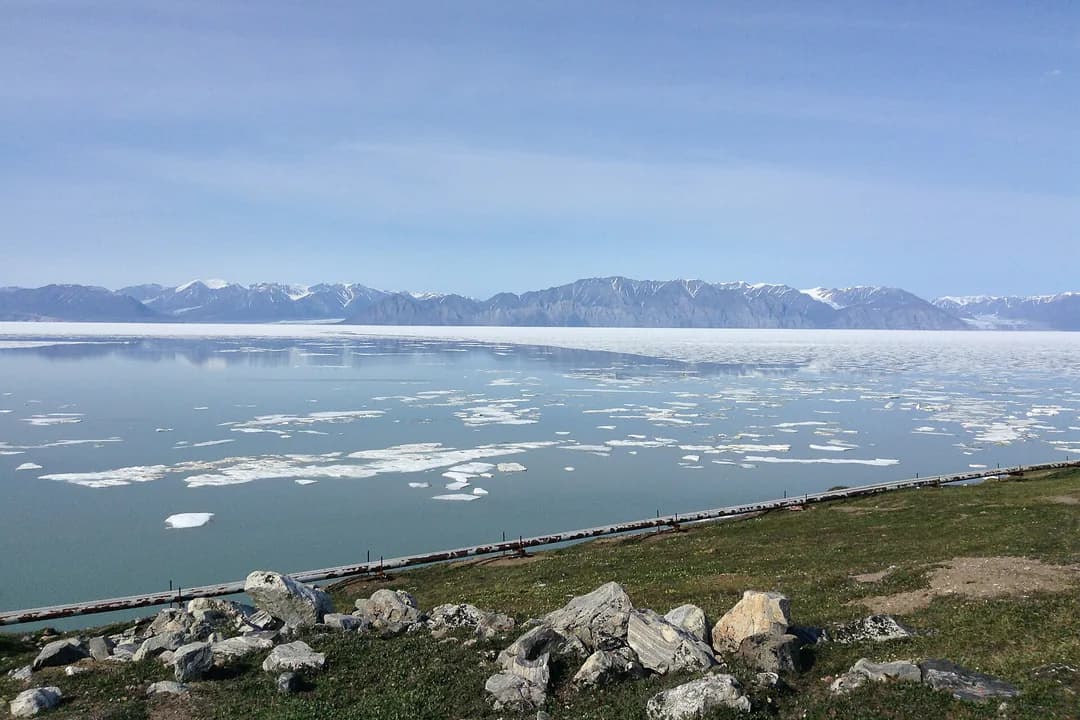
Photo: Emilijak Knezevic(opens in a new tab), CC BY-SA 4.0(opens in a new tab), cropped
Nunavut has no nominee program of its own. Immigration, Refugees and Citizenship Canada (IRCC), the federal immigration department, lists the provinces and territories that choose immigrants through a Provincial Nominee Program, then states that "Quebec and Nunavut don't have programs". Our guide to provincial nominee programs explains how nomination works where it exists.
So moving to Nunavut for good means getting permanent residence (PR, the right to live in Canada permanently) through one of IRCC's federal programs, with no territorial step. PR is not tied to a region: IRCC says permanent residents can live, work or study anywhere in Canada, Nunavut included.
The territory's name tells you whose home it is: Nunavut means "our land" in the Inuktitut language, and IRCC says Inuit have lived there for thousands of years.
No. Nunavut does not run a nominee program of its own, so people who move there use Canada's federal immigration routes.
Canada's page on provincial nominee programsA stream is one route within a province's or territory's own program, with its own rules. Nunavut has no such program, so it has no stream for our report to check.
Compare the streams of every province and territory side by sideExpress Entry is IRCC's online system for skilled workers applying for PR through the Canadian Experience Class, the Federal Skilled Worker Program or the Federal Skilled Trades Program. You enter a pool of candidates, and IRCC invites those with the most points in rounds. Our CRS calculator estimates that points score, and our Express Entry guide explains the system.
You can also come first on a work permit. IRCC says the most common kind, an employer-specific work permit, needs a job offer, and your employer may need a Labour Market Impact Assessment (LMIA) first. A positive LMIA is a document showing that no Canadian worker or permanent resident is available to do the job. Our guides explain whether you need a job offer and how an LMIA works.
French speakers have another option. The Francophone Mobility work permit makes it easier for a Canadian employer to hire you without an LMIA, if you meet its requirements and will live and work outside Quebec, as you would in Nunavut. Our guide to French-language routes covers it.
The federal Rural and Francophone Community Immigration Pilots run only in the communities IRCC lists on that page, so check the list before counting on them in Nunavut.
Nunavut's Official Languages Act recognizes Inuktut (Inuktitut and Inuinnaqtun), English and French as the territory's official languages, according to its Languages Commissioner. The Government of Nunavut also works to make the Inuit language the working language of the government.
Care can mean a journey. You may qualify for medical travel benefits when a Nunavut health care provider decides you need care that is not available in your home community, and the travel must be approved in advance.
The Nunavut Health Care Plan asks new residents to prove that they intend to make Nunavut their main home for over 12 months and are not temporary or rotational workers, for example with a letter from an employer. For residents who want to study, Nunavut Arctic College has Community Learning Centres in every community of the territory, each staffed by an adult educator who can advise on education and careers.
To join the Nunavut Health Care Plan, fill out the New to Nunavut coverage form and send it with copies of your identification and proof of residency to the Health Insurance Programs Office in Rankin Inlet. For a driver's licence, the Government of Nunavut's licence page says new residents apply at their local Motor Vehicle service provider. The Government of Nunavut's Immigrate to Nunavut page points readers to the federal programs, and IRCC's free newcomer services finder searches for settlement help by postal code, city or territory.
Nunavut runs no nominee program, so no territorial route builds on work done here; the federal one is the Canadian Experience Class, an Express Entry program that IRCC says is for skilled workers who have Canadian work experience and want permanent residence.
Studying here opens no territorial route either, since Nunavut has no nominee program; graduates look to the same federal Canadian Experience Class, which counts skilled work after your studies but, IRCC notes, not work done while studying full time.
With no territorial program, only federal rules weigh where in Canada you lived or worked before. The Canadian Experience Class counts skilled work done anywhere in Canada, Quebec included, while you were allowed to work as a temporary resident, and asks that you plan to live outside Quebec, as you would here.
The health plan's eligibility page says the plan covers people whose main home is Nunavut, shown with the proof described in the section on life in Nunavut's communities. By status:
Nunavut's plan pages do not state a waiting period, so ask the Health Insurance Programs Office, named in the first-steps section, when your cover begins.
For a driver's licence, the territory's licence page says new residents must apply within 30 days of moving, and that a licence expired for more than 12 months means an examination.
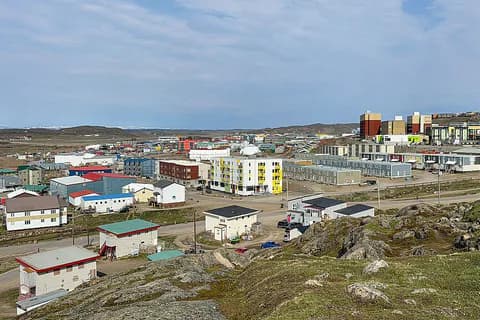
Photo: Quintin Soloviev(opens in a new tab), CC BY 4.0(opens in a new tab), cropped
Population: 7,429 (Statistics Canada, 2021 Census)
Iqaluit means "place of many fish" in Inuktitut. The City of Iqaluit says Nunavut's capital lies near the mouth of the Sylvia Grinnell River, which empties into Frobisher Bay. The settlement was called Frobisher Bay from 1955 until 1987, when it returned to its Inuktitut name, and in December 1995 it was chosen as capital of the new territory, which came into being on 1 April 1999.
Plan your move with this in mind: the City's Getting Here page says Iqaluit is accessible by air and sea only.
The city is home to Qikiqtani General Hospital, an accredited facility whose emergency room is open 24 hours a day, and the hospital is one of the places that hold application forms for the Nunavut Health Care Plan, the territory's public health insurance. For residents who want to study, Nunavut Arctic College's Nunatta Campus is on Niaqunngusiariaq Road in Iqaluit.
Answer our free questionnaire and get a free summary of your eligibility for every Canada pathway we assess, including those in Nunavut. The full report is a later choice, never a condition.
Start the free questionnaire