

Loading
Just a moment while this page opens.
Just a moment while this page opens.
Just a moment while this page opens.
How Manitoba chooses immigrants, the Manitoba streams our report checks, what changes if you already live, study or work in Canada, and what life is like in its main cities.

Photo: DrBeetrootCa(opens in a new tab), CC BY-SA 4.0(opens in a new tab), cropped
The province's own route to settling in Manitoba for good is the Manitoba Provincial Nominee Program (MPNP). Manitoba cannot make you a permanent resident (PR, someone allowed to live in Canada permanently). Instead, it selects people and nominates them, which means recommending them to the federal government for PR. You then apply for PR to Immigration, Refugees and Citizenship Canada (IRCC), the federal immigration department, which decides: to get a permanent resident visa you must meet IRCC's requirements as well as the MPNP's.
Manitoba says it chooses people on their potential to become economically established: likely to be employable, to support themselves and their families, and to contribute to the province's economy over the long term. Its skilled worker and international education streams also look for ties to the province, and its Skilled Worker Overseas pathway does not accept anyone without a connection to Manitoba, whatever their points total.
Yes. Manitoba runs the Manitoba Provincial Nominee Program (MPNP), a provincial nominee program: the province chooses (nominates) people it wants, and the federal government then decides on their permanent residence, the status that lets you live and work in Canada with no time limit.
Manitoba Provincial Nominee Program (MPNP)A stream is one route within a program, with its own rules. Our report checks 7 Manitoba streams against your answers.
MPNP Business Investor Stream - Entrepreneur Pathway
For experienced business owners or senior managers with enough personal wealth to invest in starting or buying a business in Manitoba.
MPNP Business Investor Stream - Farm Investor Pathway
For people with experience owning and running a farm who have enough personal wealth to set up a farm business in rural Manitoba and live on the farm.
MPNP International Education Stream - Career Employment Pathway
For graduates of a Manitoba college or university who work full time in Manitoba and have a full-time job offer in an occupation on the province's in-demand list.
MPNP International Education Stream - Graduate Internship Pathway
For people who earned a master's or doctoral degree in Manitoba and completed a research internship there through Mitacs, a national non-profit, even without a job offer.
MPNP International Education Stream - International Student Entrepreneur Pilot
For international graduates of a Manitoba college or university, within the program's age limits, who want to own and run a business in Manitoba instead of taking a job.
MPNP Skilled Worker in Manitoba
For people already working full time in Manitoba on a work permit who, after enough time with their employer, have been offered a full-time, long-term job there.
For skilled workers with a connection to Manitoba, such as family or friends there or past work or study in the province, who score enough on its points system.
For the Skilled Worker and International Education streams, you start with an Expression of Interest (EOI). The province calls it "not an application, but an online profile": you answer questions online, earn ranking points for your answers and join a pool of eligible candidates. A profile stays valid for one year from the day you submit it, and you can have only one active EOI at a time. The Business Investor Stream has a separate EOI process.
Points come from six factors: language, age, work experience, education, adaptability and risk. Language points are based on your Canadian Language Benchmark (CLB) level in each of reading, writing, listening and speaking, worked out from your English or French test results; the language score converter shows which level a test result matches. Adaptability points depend on your connection to Manitoba. A close relative in the province is worth 200 points, and an Invitation to Apply under a strategic recruitment initiative is worth 500. Risk only ever takes points away. The section for readers already in Canada sets out how the ranking treats work in Manitoba and work or study in another province.
The MPNP regularly draws the highest-scoring candidates from the pool and sends them a Letter of Advice to Apply (LAA), an invitation to submit a full application. The province says the number of LAAs in each draw depends on its annual processing targets and capacities, and that it may leave out occupations with a high volume of submissions. It also warns that an LAA can land in a spam or junk folder.
An LAA does not promise PR. The skilled worker FAQ says you must meet every requirement of your stream, and IRCC's, to get a permanent resident visa. Our guide to provincial nominee programs explains how a nomination differs from PR.
For an enhanced nomination, the kind linked to Express Entry (the federal online system that ranks skilled workers for PR), the pre-application FAQ says to create your Express Entry profile first and enter its profile number and Job Seeker Code in your EOI; our Express Entry guide explains that system.
The Skilled Worker Overseas rules accept three kinds of connection.
Manitoba Support is a close relative, or a friend or distant relative, living in Manitoba who will review and endorse your plan for settling and finding work. Among other conditions, your supporter must have lived in the province continuously for at least a year, be a Canadian citizen or permanent resident, and support your Settlement Plan. A close relative is a sister or brother, niece or nephew, aunt or uncle, first cousin, parent or grandparent, whether yours or your spouse's. Children living in Manitoba cannot support their parents, and a spouse of a Canadian citizen or permanent resident cannot apply to the MPNP at all.
Manitoba Experience means you lived in the province before, either as a temporary foreign worker with at least six consecutive months of full-time work for a Manitoba employer, or as an international student who completed an authorized program at a public, or registered private vocational, post-secondary institution there. Language studies do not count.
Manitoba Invitation means the MPNP invited you through a strategic recruitment initiative, after an interview on a recruitment mission or an exploratory visit. You cannot choose this connection yourself, and it is the invitation, not the visit, that creates it. Manitoba's regional immigration initiatives, developed with local partners for communities outside Winnipeg, are among these recruitment initiatives, and an Invitation to Apply under one of them is also worth 500 EOI points.
The province adds that the MPNP is not a sponsorship program: every applicant must be employable, with job-ready English, enough settlement funds and the genuine intention and ability to become economically established in Manitoba. Separately from the MPNP, IRCC's Rural and Francophone Community Immigration Pilots include Manitoba communities; our guide to community immigration programs explains how those pilots work.
Among the people Manitoba lists as not eligible to submit an application are refugee claimants and people in a federal appeal or removal process; live-in caregivers living in Canada; spouses of Canadian citizens or permanent residents; people the MPNP refused in the last six months who cannot address the reasons; and anyone with an active application to another provincial or federal immigration program. An Express Entry profile does not count as an application. If you or your spouse already has an active MPNP application, you cannot apply under another MPNP stream as well.
The skilled worker FAQ adds that Manitoba nominates only people who intend to live in the province with their dependent family members, and that its decisions are final, with no appeal. Before a final decision, if an officer cannot recommend approval, the MPNP sends a Procedural Fairness Letter setting out its concerns and allows up to 30 days to respond. False or misleading information gets an EOI refused, and the EOI page says you may then be banned from submitting another for two years.
No. Manitoba's policy on immigration representatives says that under Manitoba legislation it is illegal for immigration representatives or recruiters to charge foreign workers or future immigrants for a job offer in Manitoba, and that the Manitoba employer must cover all recruitment costs. The province's page for foreign workers names the law, The Worker Recruitment and Protection Act: employers must register with the government before hiring temporary foreign workers, recruiters must hold a licence, and neither a recruiter nor an employer can charge you money to get a job.
You do not need a paid representative at all. The MPNP says it has no official immigration representatives acting on its behalf and does not require one. If you do hire someone, they must be registered with the MPNP, and it recognizes a paid representative only if they are a lawyer in good standing with a Canadian provincial or territorial law society, a notary in good standing with the Chambre des notaires du Québec, or a consultant in good standing with the College of Immigration and Citizenship Consultants (CICC). Failing to declare a paid representative or recruiter can get your application refused. You can check an immigration adviser, and our guide to spotting immigration scams explains how to check a job offer.
If you qualify for coverage, register for a Manitoba Health Card with Manitoba Health, Seniors and Long-Term Care; the card confirms your eligibility for health benefits under The Health Services Insurance Act. Manitoba Public Insurance (MPI), which issues driver's licences, explains on its New or Returning to Manitoba page when a licence from another country can be exchanged without tests and when you need a knowledge test and a road test. The province's After You Arrive page lists other early tasks, such as getting a Social Insurance Number, which you need to work in Canada. IRCC's Find free newcomer services near you tool searches federally funded settlement services by postal code or city, for newcomers who are eligible.
In Manitoba's EOI ranking, six months or more of ongoing work in the province, with a long-term job offer from the same employer, is worth 500 adaptability points. Past authorized work there of six months or more is worth 100. If you have more than one kind of connection, the province gives adaptability points for the highest-scoring one.
Skilled Worker in Manitoba is built on ongoing work in the province. Its rules ask for a valid work permit and a full-time, long-term job offer from a Manitoba company after six months or more of continuous full-time work with it. Self-employment, unauthorized work and work done while studying full time, such as a co-op term, do not count toward that period.
IRCC's post-graduation work permit (PGWP) lets graduates of eligible schools gain Canadian work experience. Manitoba's International Education Stream is for graduates of designated Manitoba post-secondary institutions. A graduate of another province cannot use it, but may be eligible under Skilled Worker in Manitoba, which asks such graduates for at least a year of continuous full-time work with the Manitoba employer rather than six months.
Under the stream's Career Employment Pathway, a Manitoba graduate who meets the conditions can apply as soon as they hold the job offer. The conditions include a full-time program of at least a year finished in the past three years; a full-time job offer of at least a year in an occupation on Manitoba's In-Demand Occupations List, usually related to their studies; English or French at CLB 7 or higher; and full-time work in Manitoba on a valid work permit while living there. Our guide to going from a study permit to PR covers the federal rules.
Work or study in another province, yours or your spouse's, costs points in Manitoba: the EOI ranking's risk factor takes away 100 for each. Temporary foreign workers living and working in another province cannot apply to the MPNP, and Skilled Worker in Manitoba asks that your work tie to Manitoba outweigh any tie to another province.
After a move from another province, Manitoba Health coverage begins, if you are eligible, on the first day of the third month after you arrive. If you are eligible, ask your previous province's health plan about the gap; the first-steps section covers the card. By status:
Manitoba Public Insurance's New or Returning to Manitoba page says a valid licence from elsewhere in Canada lets you drive for up to three months, by which time you must exchange it. Its steps for that exchange include no test, though a driver still in a graduated (step-by-step) licensing program may need a knowledge test.
These federal programs run only in some provinces or communities, and Manitoba is one of them.
For workers with a job offer from an employer approved by a participating rural or remote community, and a recommendation from that community, where they plan to settle.
Communities taking part in Manitoba
For French speakers with a job offer from an employer approved by a participating French-speaking community outside Quebec, and a recommendation from that community, where they plan to settle.
Communities taking part in Manitoba

Photo: Ethan Sahagun(opens in a new tab), CC BY 4.0(opens in a new tab), cropped
Population: 749,607 (Statistics Canada, 2021 Census)
Winnipeg is Manitoba's capital, and the MPNP, the province's own immigration program, draws a line around it. When it ranks expressions of interest (EOI, the online profile you submit first), it gives regional development points only for a destination outside Winnipeg, and only to candidates with a social or economic connection to a community outside Manitoba's Capital Region. Its Entrepreneur Pathway also sets a higher minimum business investment inside the Winnipeg Metropolitan Region than outside it. The Winnipeg Metropolitan Region, its own site explains, is the operating name of a statutory corporation set up by the province that brings municipalities in Manitoba's Capital Region together for regional planning.
For newcomers whose destination is Winnipeg, the province's After You Arrive page names Manitoba Start as a one-stop organization connecting them to settlement, orientation, language and employment services. The City's newcomers page points to 211 for social support resources and 311 for City services, and describes its Newcomer Welcome and Inclusion Policy, developed with Immigration Partnership Winnipeg and adopted in February 2020.
The University of Manitoba dates from 1877 and has two main campuses, Fort Garry and Bannatyne. The University of Winnipeg, with roots going back to 1871, sits in the heart of downtown and also runs a high school, the UW Collegiate. RRC Polytech has several Winnipeg campuses, among them the Exchange District and Notre Dame campuses.
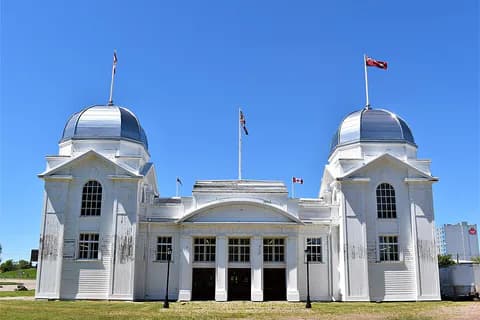
Photo: Words in the Wind(opens in a new tab), CC BY-SA 4.0(opens in a new tab)
Population: 51,313 (Statistics Canada, 2021 Census)
Brandon is one of the communities taking part in the Rural Community Immigration Pilot.
Economic Development Brandon, which leads economic development for the City of Brandon, administers the Southwestern Manitoba Immigration Initiative (SWMII), whose participating communities include Brandon, Boissevain, Virden and Neepawa. It is a regional partnership under the Skilled Worker Overseas pathway of the Manitoba Provincial Nominee Program (MPNP), the province's own immigration program. Selected applicants may receive a community endorsement; the province then evaluates endorsed applicants and nominates those who meet its requirements, and IRCC makes the final decision on permanent residence.
Brandon University, which celebrated its centennial in 1999, grew out of Brandon College and received its university charter on 5 June 1967; it describes itself as a government-supported institution. Assiniboine College has its North Hill Campus in the city, where the Manitoba government says the college's Field to Fork agriculture programs are based. For buses, the City's Brandon Transit page describes BDN Transit, which lets you plan a trip, view schedules and see where a bus is in real time.
Answer our free questionnaire and get a free summary of your eligibility for every Canada pathway we assess, including those in Manitoba. The full report is a later choice, never a condition.
Start the free questionnaire