

Loading
Just a moment while this page opens.
Just a moment while this page opens.
Just a moment while this page opens.
How Northwest Territories chooses immigrants, the Northwest Territories streams our report checks, what changes if you already live, study or work in Canada, and what life is like in its main cities.
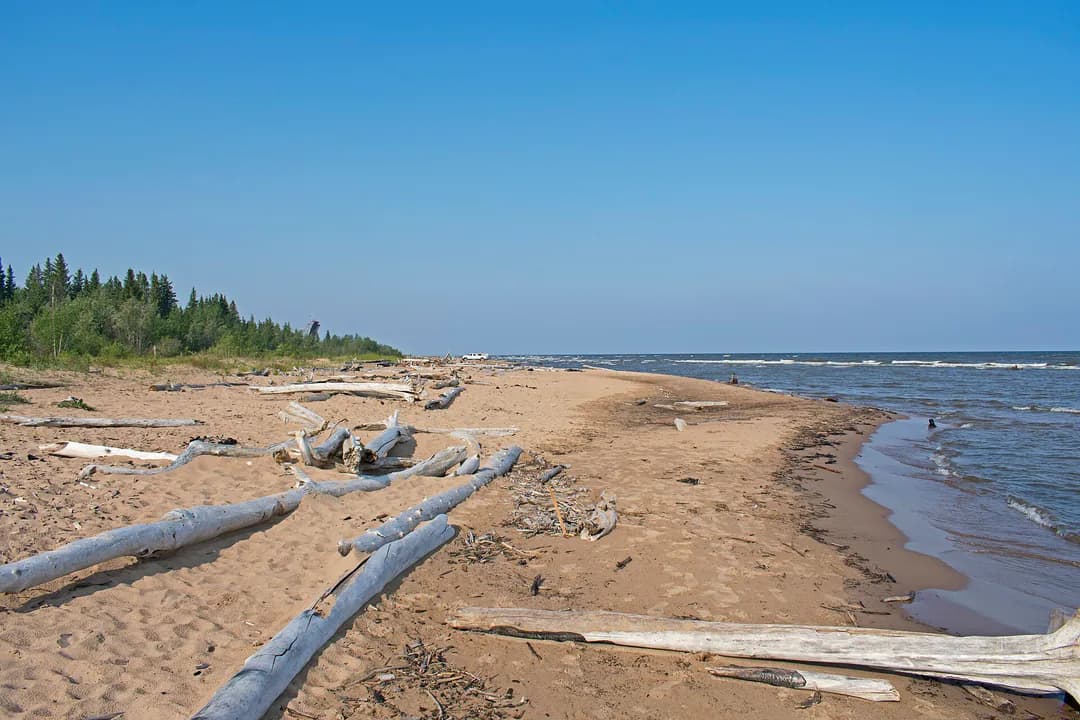
Photo: Ymblanter(opens in a new tab), CC BY-SA 4.0(opens in a new tab)
To move to the Northwest Territories (NWT) through its own program, the Northwest Territories Nominee Program (NTNP), you need to either have a job offer from an NWT employer or be ready to open, buy or invest in a business there.
If successful, the NTNP nominates you, meaning it recommends you to the federal government. You then apply for permanent residence (PR, the right to live in Canada permanently) to Immigration, Refugees and Citizenship Canada (IRCC), the federal immigration department, which makes that decision after checks including your medical exam and police certificate.
For workers, the Employer-Driven Stream is for jobs that no Canadian or permanent resident is available to fill, and its points system rewards ties to the territory, such as working in a small NWT community.
Yes. Northwest Territories runs the Northwest Territories Nominee Program (NTNP), a provincial nominee program: the province chooses (nominates) people it wants, and the federal government then decides on their permanent residence, the status that lets you live and work in Canada with no time limit.
Northwest Territories Nominee Program (NTNP)A stream is one route within a program, with its own rules. Our report checks 5 Northwest Territories streams against your answers.
For people with enough personal wealth to start, buy or invest in a Northwest Territories business and run it, with lower amounts required outside the capital, Yellowknife.
For workers in entry-level or semi-skilled jobs who hold a work permit and have already worked full time in the same job for the Northwest Territories employer offering it.
For people who have a profile in Express Entry, Canada's online system for skilled workers, a work permit, and a skilled job offer from a Northwest Territories employer.
For people who speak both French and English and have a job offer from a Northwest Territories employer, at any skill level.
For workers with a work permit and a job offer from a Northwest Territories employer in a job that needs formal education or specialized training, plus related work experience.
With a job offer, you use the Employer-Driven Stream: your NWT employer registers in the NTNP's online portal and applies on your behalf, and you complete an expression of interest (EOI), which the EOI page calls an online profile made by filling in a survey, not an application. Only one active EOI is allowed: a new one replaces any earlier ones.
Your answers earn points for human capital (language, age, work experience and education), for ties to the NWT labour market (such as time worked there, a closed NWT work permit (tied to one employer) or a trades job offer) and for adaptability (such as immediate family in the NWT). The territory holds draws through the year, inviting the employers of the highest-scoring candidates to send a full application.
Each category of this stream asks for a valid work permit: see Skilled Worker, Entry Level/Semi-Skilled Occupations and NWT Express Entry.
After a nomination in the Employer-Driven or Francophone Stream, the NTNP must be told within 10 business days of job changes such as resigning, a lay-off or hours below 30 a week. A nomination is not PR; our guide to provincial nominee programs explains the difference. NWT Express Entry is for people in IRCC's Express Entry pool, the federal points system for skilled workers, and IRCC says such a nomination brings 600 extra points. The CRS calculator estimates that score; our Express Entry guide explains the pool.
The Business Stream starts with a self-assessment, then an exploratory visit to the NWT with a face-to-face interview. If its pre-screening of your business idea and interview goes well, the territory invites you to apply with a business plan. An approved applicant signs a Business Performance Agreement, a two-year legal agreement with the territorial government setting out what you must do to receive a nomination certificate. Decisions are final and cannot be appealed.
The territory says its Francophone Stream is meant to grow the pool of workers who speak both French and English at every job level of the National Occupational Classification (NOC), the federal system that sorts jobs by training, education, experience and responsibilities (TEER 0 to 5); our NOC guide explains it. It asks for a valid job offer from an NWT employer, and you must meet minimum levels in both languages when you apply, with test results as proof. Our guide to French-language immigration routes covers the federal options for French speakers.
Register with the NWT Health Care Plan for an NWT Health Care Card; the application page asks foreign nationals for a copy of their work permit or other immigration document and two documents showing their NWT address. The territory's page for foreign nationals says some countries' driver's licences can be transferred; otherwise you must pass a knowledge test and a road test. Welcome to the NWT covers health care, schools, banking and daily life, and IRCC's newcomer services finder lists free settlement help for eligible newcomers.
If you are already in Canada, the Employer-Driven Stream's program guidelines say you must have legal status to work and hold a valid work permit throughout the application process. For entry-level jobs, the Entry Level/Semi-Skilled Occupations category also asks that you have worked full time for twelve months in the same position with the employer applying for you. Work in the NWT earns expression of interest points too, which the section on how the NTNP picks people describes.
After graduation, the permit to know is the post-graduation work permit (PGWP), which IRCC says lets graduates of eligible schools gain Canadian work experience; finishing a program does not by itself make you eligible.
If you studied in the territory, the NTNP's expression of interest gives adaptability points for post-secondary education completed in the NWT, points that study in another province or territory does not earn. You still need a job offer from an NWT employer. Skilled work after your studies can also count toward the federal Canadian Experience Class, an Express Entry program for skilled workers with Canadian work experience, though not work done while you were a full-time student.
For the Employer-Driven Stream, the program guidelines require the work to be in the NWT, not remote, and allow a refusal if you no longer live or work there when your application is decided.
After a move within Canada, the health plan's information for residents says you usually become eligible on the first day of the third month after the month you became a resident, and the province or territory you left covers you until then. You must be lawfully in Canada, make your home in the NWT and spend at least 153 days a year there. By status:
If your licence is from another province or territory, the territory's transfer page says you have 30 days after moving to transfer it, in person at a driver and vehicle office, and lists no test, only an NWT medical exam for professional classes 1 to 4.
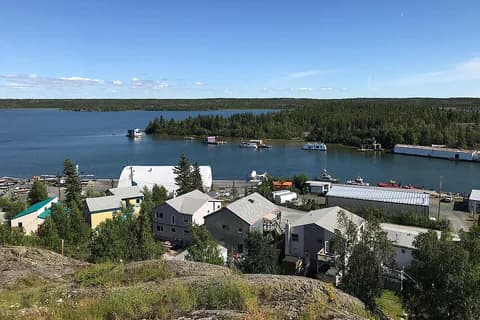
Photo: dvs(opens in a new tab), CC BY 2.0(opens in a new tab), cropped
Population: 20,340 (Statistics Canada, 2021 Census)
Yellowknife grew out of gold mining. The City of Yellowknife says it was founded in 1934 on the northern shore of Great Slave Lake, in the traditional territory of the Yellowknives Dene First Nation, and was named capital of the Northwest Territories in 1967.
The city limits matter for the Business Stream of the territory's own immigration program, the NTNP: the minimum investment and net worth for a business inside Yellowknife's corporate boundaries are higher than for one elsewhere in the NWT.
For work, the City's moving guide points to territorial, federal and municipal government, mining, construction and small businesses. The same page names the organizations that give newcomers from outside Canada free settlement and integration services in English and French: the Conseil de développement économique des Territoires du Nord-Ouest, Collège nordique, the Fédération franco-ténoise and the NWT Literacy Council.
Stanton Territorial Hospital in Yellowknife is the NWT's major health and referral centre. Aurora College has its North Slave Campus in the city, with programs that include a Bachelor of Science in Nursing and Business Administration. For buses, see the City's transit page.
Answer our free questionnaire and get a free summary of your eligibility for every Canada pathway we assess, including those in Northwest Territories. The full report is a later choice, never a condition.
Start the free questionnaire