

Loading
Just a moment while this page opens.
Just a moment while this page opens.
Just a moment while this page opens.
Can you move to Canada as an engineer? Getting licensed, the immigration routes that fit this job, and your first steps, from official pages.
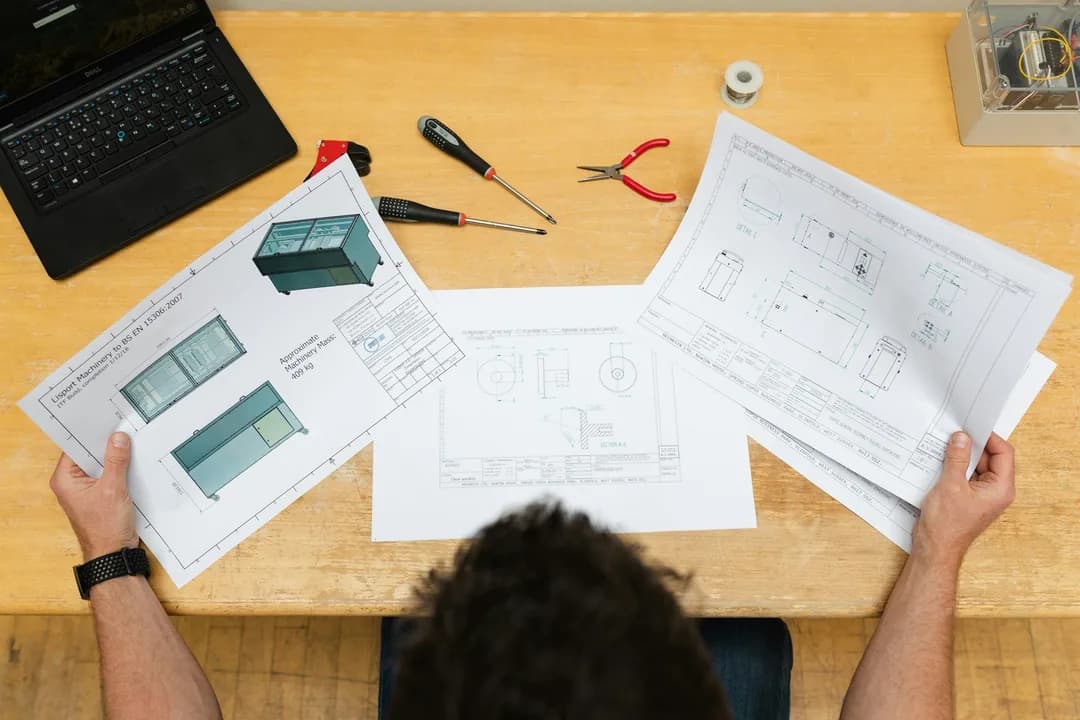
Engineers from any discipline can apply to immigrate to Canada, but moving there and working as an engineer there need two separate approvals. The federal immigration department, Immigration, Refugees and Citizenship Canada (IRCC), decides whether you may become a permanent resident (PR, the right to live in Canada permanently). Engineering itself is regulated by each province and territory. Engineers Canada, a national body that supports the regulators, says that to practise you must hold and maintain a licence from one of Canada's engineering regulators, and it does not grant licences itself. Even the word is protected: Engineers Canada states that in Canada not just anyone can use the title engineer. This page covers what every engineering discipline shares, then the fields that have no page of their own.
Canada sorts jobs with the National Occupational Classification (NOC). Immigration programs use it to identify your job and its TEER level, which says how much training the job usually needs.
TEER 1: jobs that usually need a university degree
Express Entry is the online system Canada uses to invite skilled workers to apply for permanent residence. Some of its rounds invite only people with recent work experience in a set group of jobs, called a category. This job is in:
In Canada, you need a licence to work in this job, from the regulator of the province or territory where you plan to work.
Job Bank, the federal jobs site, names the engineering regulator for each province and territory; the Northwest Territories and Nunavut share one. Engineers Canada says requirements vary by regulator, but lists the criteria that generally apply:
If your degree is not CEAB-accredited, the regulator assesses your academic knowledge, using discipline syllabi that Engineers Canada publishes as a guide, and may ask you to write exams. Experience is judged on what you can show, not only on years: Professional Engineers Ontario (PEO) notes that all engineering regulators across Canada use a competency-based assessment to decide whether an applicant is ready for a licence.
Quebec adds a language rule. Its regulator, the Ordre des ingénieurs du Québec (OIQ), says you must be proficient in French under the province's Charter of the French Language. Unless you studied in French for at least three years full-time or meet another of its conditions, you must pass a French exam set by the Office québécois de la langue française (OQLF). If you trained outside Quebec and meet every condition except French, the OIQ says it may, in limited circumstances, grant a temporary permit: it lasts one year, can be renewed up to three times over 48 months, and requires you to sit the OQLF exam at least once a year.
Engineers Canada has been a signatory of the Washington Accord, an agreement between the bodies that accredit engineering degrees in member countries, since the accord began in 1989. It says the accord is meant to speed up the academic part of licence reviews. For each member country, the page gives the first year of graduates the accord applies to, and for some countries it covers only part of their degrees: for India, the year is 2014, and only programmes accredited by the National Board of Accreditation at institutions it accepts as Tier 1 are covered.
Engineers Canada has also negotiated mutual recognition agreements with Engineers Australia, Engineers Ireland, the Hong Kong Institution of Engineers, French engineering bodies and the Nevada and Texas state engineering boards. They are meant for engineers already licensed by those bodies, and only a provincial or territorial regulator can decide whether to apply one to your licence.
At the federal level, the route for skilled workers is Express Entry, an online system IRCC uses to manage applications for its skilled worker programs. IRCC scores your profile with the Comprehensive Ranking System (CRS) and holds several kinds of rounds of invitations: general rounds for anyone eligible for an Express Entry program, rounds for a single program, and category rounds for candidates who fit a category the Minister has set. Our Express Entry guide explains the whole process, and our CRS calculator gives an estimated score.
IRCC's science, technology, engineering and math (STEM) category lists some engineering occupations but not others. If yours is listed, its rounds require at least 12 months of full-time work (or the part-time equivalent) over the past three years in one listed occupation, whether in Canada or abroad, as well as eligibility for an Express Entry program. If it is not, you still compete in general and program rounds. There is more in our guide to category rounds.
Most provinces and territories can also nominate people for permanent residence if they plan to settle there; see our provincial nominee guide. In Saskatchewan, the Innovation and Tech Talent Pathway names chemical, metallurgical and materials, and geological engineers among its occupations. It asks for a permanent, full-time innovation or technology job offer in the province and, for those engineers, a letter from the provincial regulator showing your engineer-in-training application (the stage before a full licence) has been approved or that you have been assigned confirmatory exams.
For Express Entry, IRCC describes your work using the National Occupational Classification (NOC), and it says to pick the group whose main duties match what you did, not just its title.
The NOC says chemical engineers design chemical processes and equipment and oversee plants making plastics, medicines, pulp and paper, food and other products. Their group is not on IRCC's STEM list, so federally they rely on general and program rounds, but Saskatchewan's tech pathway names them.
Industrial and manufacturing engineers work out the best use of equipment, people, materials and procedures, for factories but also for government, financial and health care institutions. Their group is on IRCC's STEM list, so recent work in it counts toward those category rounds.
Metallurgical and materials engineers study metals, ceramics, semiconductors and composites and design the processes that extract and refine them, for employers such as mining, metal processing and manufacturing companies. Welding engineers belong to this group. It is missing from IRCC's STEM list, but Saskatchewan's tech pathway includes it.
Canada files geotechnical engineers under geological engineers, who study ground conditions to judge sites for civil engineering, mining and oil and gas projects. The group appears both on IRCC's STEM list and in Saskatchewan's tech pathway.
Aerospace engineers design and test aircraft, spacecraft and their systems for manufacturers, airlines, government and research. Aircraft maintenance engineers, despite the name, are classed with aircraft mechanics and inspectors, and avionics engineers with electrical engineers. With no place on IRCC's STEM list, aerospace engineers compete in the wider federal rounds.
Electronics engineers share a group with electrical engineers, along with control systems and instrumentation engineers, so read the electrical engineer page.
The civil engineers group lists environmental engineer among its example titles, while chemical engineers include environmental chemical engineers. Your duties decide which applies; the civil engineer page covers the first.
Mechatronic and robotics engineers appear in the mechanical engineers group, so start with the mechanical engineer page. Automation engineers who work on electrical and electronic systems are grouped with electrical engineers.
Agricultural, biomedical, marine and textile engineers, naval architects and engineering physicists fall under other professional engineers, a group left off IRCC's STEM list.
These fields have their own pages, with the licensing steps and provincial routes that name them: civil engineer, mechanical engineer and electrical engineer. Software developers should read the software engineer page: Engineers Canada says that in most provinces you cannot use the title software engineer without an engineering licence, even if your employer gives it to you, though Alberta changed its law in 2023 to allow it.
Calling yourself an engineer in Canada before you hold a Canadian licence. Engineers Canada says that claiming to be an engineer without being licensed is against the law, and that P.Eng. and any title containing the word engineer are for licence holders only. The Newfoundland and Labrador regulator, PEGNL, says that using such a title in a profile, such as on LinkedIn, is misleading and illegal. Regulators can take legal action and courts can impose fines. On your CV, describe your degree and experience, and use only titles your regulator grants you.
Answer our free questionnaire, which asks about your work, and get a free summary of your eligibility for every Canada pathway we assess. The full report is a later choice, never a condition.
Start the free questionnaire