

Loading
Just a moment while this page opens.
Just a moment while this page opens.
Just a moment while this page opens.
Can you move to Canada as a dentist? Getting licensed, the immigration routes that fit this job, and your first steps, from official pages.
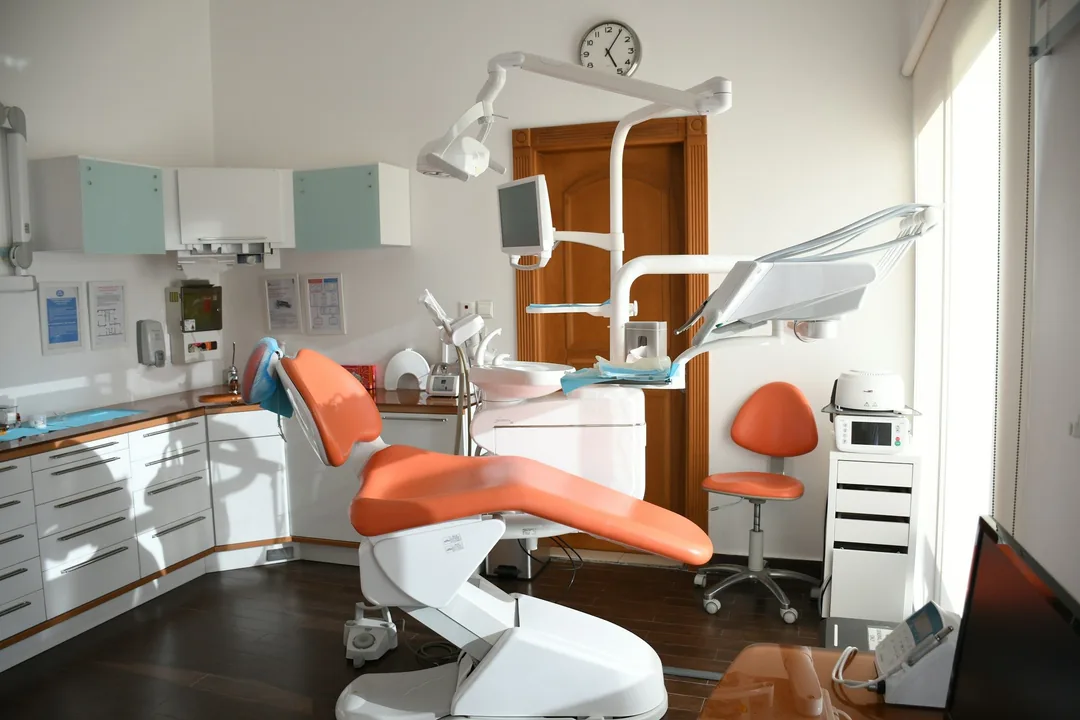
Yes. Dentists can immigrate to Canada, and the move takes two different kinds of approval. Immigration, Refugees and Citizenship Canada (IRCC), the federal immigration department, decides your immigration, for example whether you become a permanent resident (PR) with the right to settle in Canada. Your licence to practise comes from the dental regulator of the province or territory where you will work. The National Dental Examining Board of Canada (NDEB) says every province asks for the same two things: a dental degree (BDS, DDS or DMD) and an NDEB certificate. Ontario's regulator spells out one more condition before you treat patients there: work authorization issued by IRCC, such as PR or a work permit that allows dental practice. Neither permission replaces the other.
Canada sorts jobs with the National Occupational Classification (NOC). Immigration programs use it to identify your job and its TEER level, which says how much training the job usually needs.
TEER 1: jobs that usually need a university degree
Express Entry is the online system Canada uses to invite skilled workers to apply for permanent residence. Some of its rounds invite only people with recent work experience in a set group of jobs, called a category. This job is in:
In Canada, you need a licence to work in this job, from the regulator of the province or territory where you plan to work.
A national body for qualifications earned outside Canada: it assesses them or sets the entry exam for this job. The regulator in your province decides whether you go through it.
Job Bank lists dental regulators by province and names NDEB as the first contact for dentists trained abroad. Your next step depends on whether your dental program is accredited, which in Canada the Commission on Dental Accreditation of Canada decides. The Royal College of Dental Surgeons of Ontario (RCDSO), Ontario's regulator, treats degrees from Canada, the United States, Australia, New Zealand and Ireland as accredited, along with those of one named university each in Saudi Arabia and Turkey, and their graduates apply directly for NDEB's certification exam. Outside Canada and the United States, this applies only to graduates from set dates onward.
For graduates of other programs, NDEB's options include its Equivalency Process and an accredited qualifying or degree completion program at a Canadian faculty of dentistry. The Equivalency Process is a set of exams taken in this order:
You can sit the AFK and the ACJ three times each. Certification comes next through the Virtual OSCE, 200 questions, most of them based on clinical cases, again with a limit of three attempts. The NDEB certificate does not expire, but provincial regulators may still ask for extra documents, a jurisprudence test and proof of language skills.
RCDSO, for example, accepts IELTS, Academic or General Training, with 7 in each skill and 7.5 overall, CELPIP-General with 8 in each skill, and other tests, with results valid for two years. For RCDSO, a letter from your dean confirming that your dental program was taught entirely in English or French can replace the test.
Express Entry is how IRCC manages immigration applications from skilled workers online. Each candidate who creates a profile and enters the pool gets a Comprehensive Ranking System (CRS) score, and IRCC chooses whom to invite by those points when it asks people to apply for PR. Our Express Entry guide covers the steps, and our CRS calculator gives an estimate of your score.
Dentistry is one of the jobs IRCC lists for rounds that invite health and social services workers only, so in those rounds you are ranked only against candidates who also fit the list. You count with at least 12 months of full-time work as a dentist, or the same amount part-time, within the last three years; it can be in Canada or abroad, and the months need not be in a row. You must also meet Express Entry's own minimum criteria. Our guide to category rounds explains how IRCC uses them.
Provinces and territories can also nominate, meaning put forward, people who want to become permanent residents, and a nominee who goes through Express Entry gets 600 additional points. Our provincial nominee guide walks through it. Provincial routes that name dentists include:
Not necessarily. NDEB's Equivalency Process tests what you already know instead of making you repeat a degree, and you do not need PR or Canadian citizenship to apply for it or sit its exams. The alternative is to study: qualifying and degree completion programs at Canadian faculties of dentistry are designed to familiarize graduates from abroad with dental practice in Canada, and NDEB lists them in Alberta, Saskatchewan, Manitoba, Ontario, Quebec and Nova Scotia. RCDSO describes them as two-year programs. NDEB says completing one makes you eligible for its certification exam without the Equivalency Process, and that a degree completion program gives you a degree from an accredited university, so you follow the route for accredited graduates.
Expecting Australia's dental exams to count in Canada. NDEB says there is no reciprocity between it and the Australian Dental Council: passing Australia's equivalency process does not let you go straight to Canadian certification, and you still complete NDEB's own Equivalency Process first. If Canada is your aim, start with NDEB's exams, and plan your AFK attempts with care, because you get three and a pass is needed before the other Equivalency Process exams.
Answer our free questionnaire, which asks about your work, and get a free summary of your eligibility for every Canada pathway we assess. The full report is a later choice, never a condition.
Start the free questionnaire