

Loading
Just a moment while this page opens.
Just a moment while this page opens.
Just a moment while this page opens.
Can you move to Canada as a physiotherapist? Getting licensed, the immigration routes that fit this job, and your first steps, from official pages.
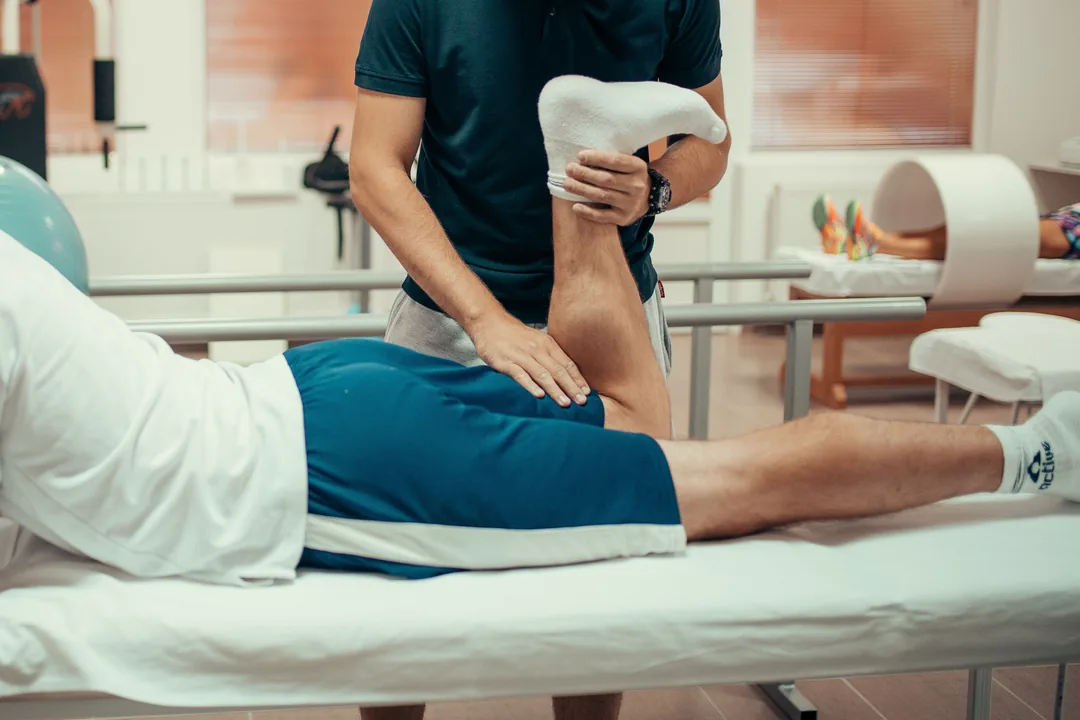
Photo: Shixart1985(opens in a new tab), CC BY 2.0(opens in a new tab)
Yes. Physiotherapists can immigrate to Canada, but moving and practising are approved by different authorities. Immigration, Refugees and Citizenship Canada (IRCC), the federal immigration department, decides whether you can come, for example as a permanent resident (PR), someone allowed to live in Canada permanently. A licence to practise comes from the physiotherapy regulator of your province or territory, and in Canada even the job title is protected: you need a licence to call yourself a physiotherapist or physical therapist, or to use the letters PT. Before a regulator licenses someone educated abroad, the Canadian Alliance of Physiotherapy Regulators (CAPR) assesses them on the regulators' behalf, everywhere except Quebec, which runs its own process.
Canada sorts jobs with the National Occupational Classification (NOC). Immigration programs use it to identify your job and its TEER level, which says how much training the job usually needs.
TEER 1: jobs that usually need a university degree
Express Entry is the online system Canada uses to invite skilled workers to apply for permanent residence. Some of its rounds invite only people with recent work experience in a set group of jobs, called a category. This job is in:
In Canada, you need a licence to work in this job, from the regulator of the province or territory where you plan to work.
A national body for qualifications earned outside Canada: it assesses them or sets the entry exam for this job. The regulator in your province decides whether you go through it.
Job Bank says a licence or registration with a regulator is required in all provinces and territories, and it lists regulators by province. For physiotherapists educated outside Canada, CAPR's two stages come first: credentialling, a review of your identity, education and experience that can begin before you arrive, and then the Canadian Physiotherapy Examination (CPTE), which you must pass before applying for a licence anywhere except Quebec.
Credentialling depends on where you trained. If you trained in and are registered, or eligible to register, in Australia, Hong Kong, Ireland, New Zealand, South Africa, the UK or the USA, CAPR's Pre-Approved Pathway applies. For those who do not qualify for it, CAPR's new Comparability Pathway launches on 15 October 2026, and people who applied under its earlier standard pathway stay in that one. The Comparability Pathway starts with a check of your entry-to-practice physiotherapy degree, supervised clinical placement, language skills and a course on Canadian health care, followed by the Physiotherapy Evaluation Tool, a 150-question multiple-choice assessment. The outcome is comparable, partially comparable (you complete targeted learning first) or not comparable, which means you cannot take the CPTE.
The CPTE is a five-hour virtual exam, supervised remotely, with no test centres. It has an oral section, where you answer examiners on clinical cases, and a written multiple-choice section, and you pass or fail on both together.
For language, CAPR accepts CELPIP-General, IELTS General Training or Academic, PTE Core, TEF and TCF, with a minimum in every skill (for IELTS, 7.0 in reading and listening and 6.5 in writing and speaking) reached in one sitting within the past two years. You need no test if you completed your physiotherapy education in Australia, the USA, New Zealand, Ireland, the UK or France.
Through Express Entry, IRCC manages skilled workers' immigration applications online: you create a profile to enter its pool, receive a Comprehensive Ranking System (CRS) score, and in each round IRCC invites the top-ranking candidates who are eligible to apply for PR. Our Express Entry guide covers each step, and our CRS calculator estimates your points.
Physiotherapists are included on the occupation list for IRCC's rounds for health and social services workers. Being on that list means that, in such a round, you compete only with others who fit it. You fit it with at least 12 months of full-time physiotherapy work, or the same amount part-time, within the last three years, gained in Canada or abroad. To be invited, you also need to meet the minimum criteria for Express Entry. Our guide to category rounds goes further.
Provinces and territories can also nominate candidates for PR, meaning they pick them and put them forward to IRCC, and a nomination through Express Entry adds 600 points. Our provincial nominee guide explains how. Routes that name physiotherapists include:
Yes, for CAPR's part. CAPR says credentialling can begin before you arrive, and because the CPTE is virtual, CAPR expects some candidates to take it from outside Canada; it tries to give them appointments at reasonable local times, within the limits of Canada's time zones. The licence itself still comes from a provincial regulator, and IRCC decides separately whether you may live and work in Canada. The College of Physiotherapists of Ontario, for example, calls passing the CPTE the last step before you can register for an Independent Practice certificate, its full licence. It is phasing out Provisional Practice, the class that allows work under a supervisor before full licensing, and takes no new applicants for it.
Expecting years of experience to replace the exam. CAPR says that, whatever their work experience, physiotherapists educated abroad must complete credentialling and pass the CPTE. Partial credit does not carry over either: if you fail the CPTE, you retake both sections, and a pass in the written part of the older Physiotherapy Competency Examination does not excuse you from either of them. Plan your study time for the full exam, whatever your career so far.
Answer our free questionnaire, which asks about your work, and get a free summary of your eligibility for every Canada pathway we assess. The full report is a later choice, never a condition.
Start the free questionnaire